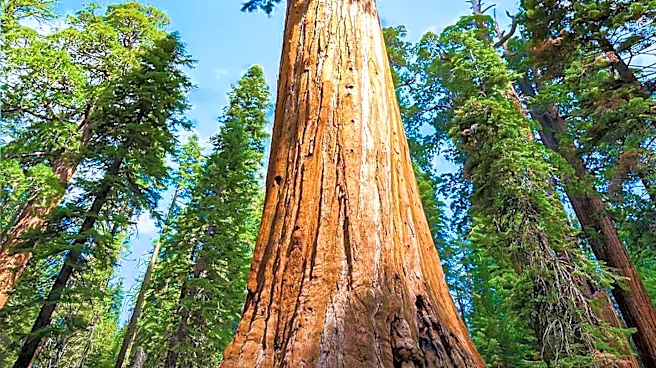



Sequoia National Park, nestled in California's southern Sierra Nevada mountain range, stands as a testament to natural grandeur and conservation efforts. Established on September 25, 1890, the park protects a vast expanse of forested, mountainous terrain, covering 404,064 acres. It is renowned for its monumental giant sequoia trees, including the General Sherman Tree, which holds the distinction of being the largest tree on Earth by volume. Beyond
its ancient arboreal inhabitants, the park also encompasses Mount Whitney, the highest point in the contiguous United States, reaching an elevation of 14,505 feet above sea level. This unique combination of towering trees and majestic peaks makes Sequoia National Park a significant natural preserve.
The Majesty of Giant Sequoias
One of the primary draws of Sequoia National Park is its impressive groves of giant sequoia trees. These magnificent trees are not only massive in scale but also represent a living link to ancient ecosystems. The General Sherman Tree, located within the park's Giant Forest, is particularly famous for its sheer volume, making it the largest tree globally. The Giant Forest itself is a remarkable area, home to five of the ten largest trees in the world, showcasing the incredible biodiversity and natural heritage protected within the park's boundaries.The Giant Forest is interconnected by the Generals Highway to Kings Canyon National Park's General Grant Grove. This neighboring grove also boasts significant giant sequoias, including the General Grant Tree. Together, Sequoia and Kings Canyon National Parks preserve an extensive area of old-growth forests, totaling 202,430 acres. These forests are crucial for maintaining ecological balance and providing habitat for numerous species, highlighting the importance of these protected lands.
Mount Whitney: The Apex of the Contiguous United States
Beyond its ancient forests, Sequoia National Park is also home to Mount Whitney, which stands as the highest peak in the contiguous United States. Reaching an impressive altitude of 14,505 feet above sea level, Mount Whitney contributes significantly to the park's dramatic vertical relief, which spans nearly 13,000 feet. This extreme elevation difference creates diverse ecological zones, from the lower forested areas to the alpine environments near the summit.The presence of Mount Whitney within the park's boundaries underscores the varied landscapes and natural wonders that Sequoia National Park protects. Its towering presence offers a stark contrast to the ancient, massive sequoia trees, showcasing the full spectrum of natural beauty found in the Sierra Nevada. The park's administration by the National Park Service, often in conjunction with Kings Canyon National Park, ensures the preservation of these iconic natural features for future generations. In 1976, UNESCO further recognized the significance of these areas by designating them as the Sequoia-Kings Canyon Biosphere Reserve.