



In September 1913, a 20-year-old American amateur named Francis Ouimet achieved a stunning upset at the U.S. Open, forever changing the landscape of golf in the United States. His victory, secured in an 18-hole playoff against two of the world's most celebrated British professionals, Harry Vardon and Ted Ray, was more than just a tournament win; it was a pivotal moment that ignited widespread interest in the sport across the nation. Ouimet's triumph
challenged the prevailing dominance of British golfers and demonstrated that American talent could compete at the highest level, making golf accessible and inspiring a new generation of players.
The Stage: The Country Club and International Competition
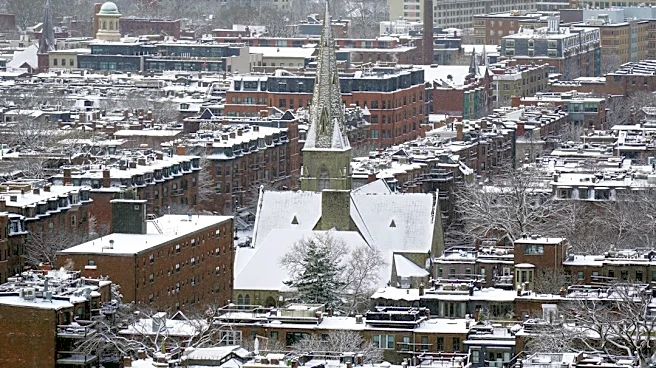
Brookline, Massachusetts, a suburb southwest of Boston, set the scene for the 19th U.S. Open, held from September 18–20, 1913, at The Country Club. This prestigious event had been strategically postponed from its original June dates to ensure the participation of the renowned British golfers, Harry Vardon and Ted Ray, both from Jersey. Vardon, a five-time Open Championship winner and the 1900 U.S. Open champion, and Ray, the 1912 British Open champion, were considered the top two golfers globally, making their presence a significant draw and a formidable challenge for any American contender.
The tournament format was stroke play over 72 holes, with the four rounds spread across two days, Thursday and Friday. The course, measuring 6,235 yards with a par of 73, tested the field of 66 players, which was cut to 54 after the initial rounds. The anticipation was high, especially with the British champions expected to assert their dominance, a common theme in golf at the time, where British players had historically won the first sixteen U.S. Opens.
The Dramatic Tie and Playoff Setup
As the tournament progressed, the competition intensified. After 36 holes, Harry Vardon and Wilfrid Reid were co-leaders, both at 147 (+1). By the end of the third round on Friday morning, a remarkable three-way tie emerged at the top: Francis Ouimet, Harry Vardon, and Ted Ray were all knotted at 225 (+6). The afternoon's final round saw all three contenders shoot a score of 79, leaving them still tied at the end of regulation play with a total of 304 (+12).
This unprecedented tie necessitated an 18-hole playoff to determine the champion. The stage was set for a dramatic showdown between the young American amateur and the two seasoned British professionals. The playoff was scheduled for the following day, Saturday, adding to the suspense and public interest surrounding the event. The outcome would not only decide the U.S. Open title but also carry significant symbolic weight for the future of golf in America.
Ouimet's Playoff Triumph and Lasting Legacy
The Saturday playoff round unfolded with immense tension. All three golfers were tied at even-par 38 at the turn, indicating a closely contested battle. However, Francis Ouimet then delivered a spectacular performance on the back nine, playing bogey-free and shooting a 34, resulting in a final playoff score of 72 (-1). Harry Vardon finished second with a 77, and Ted Ray came in third with a 78. Ouimet's five-stroke victory over Vardon and six-stroke lead over Ray was a decisive win.
This stunning upset was widely celebrated and is credited with significantly boosting the popularity of golf in the United States. Before Ouimet's win, golf was largely seen as a sport for the wealthy, dominated by British players. His victory, as the first amateur to win the U.S. Open, captured national attention and was front-page news across the country. It inspired a surge in American participation, with the number of players tripling and many new courses, including public ones, being built in the decade following his triumph. Ouimet's achievement was so impactful that it inspired the book and film, "The Greatest Game Ever Played," solidifying its place as a landmark moment in golf history.