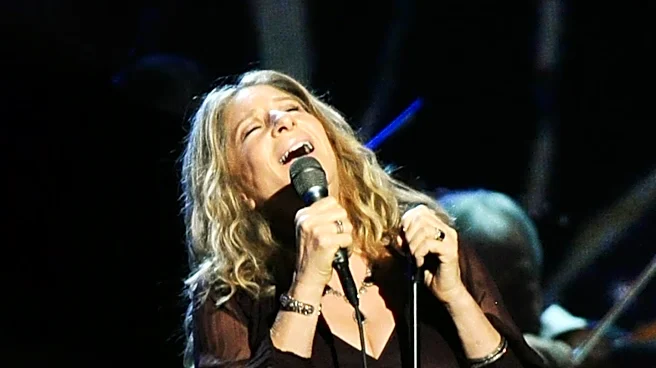





"Yentl," the 1983 romantic musical drama, is distinguished not only by its compelling narrative but also by its integral musical score and songs. Composed by Michel Legrand, with lyrics penned by Alan and Marilyn Bergman, the music serves as a powerful storytelling device, particularly for conveying the inner thoughts and emotions of the protagonist, Yentl Mendel. Barbra Streisand, who starred in and directed the film, performed all the songs, making
them a direct expression of her character's journey. This approach allows the audience to delve deeper into Yentl's motivations, struggles, and aspirations as she navigates a world that restricts her intellectual pursuits.
Songs as Narrative and Emotional Expression
The film incorporates music to tell the story of Yentl Mendel, an Ashkenazi Jewish woman in Poland in 1904. Her decision to disguise herself as a man, Anshel, to pursue an education in Talmudic law is underscored by musical numbers that articulate her internal monologue. Unlike traditional musicals where songs might interrupt the action, in "Yentl," the songs are woven into the fabric of the narrative, often representing Yentl's unspoken thoughts and feelings. This technique allows for a more intimate connection between the character and the audience, providing insight into her complex emotional landscape.
Two prominent songs from the film, "Papa, Can You Hear Me?" and "The Way He Makes Me Feel," both sung by Streisand, exemplify this narrative function. "Papa, Can You Hear Me?" likely reflects Yentl's longing for her deceased father, who secretly taught her the Talmud, and her plea for guidance and understanding as she embarks on her unconventional path. It speaks to her deep-seated desire for knowledge and her connection to her past. "The Way He Makes Me Feel," on the other hand, would articulate her burgeoning romantic feelings, particularly for Avigdor, and the confusion and joy that accompany these emotions while she is living as Anshel.
The Impact of the Musical Score
The musical score and songs are crucial in highlighting the film's themes of self-discovery, defiance of gender roles, and the pursuit of education. Through her singing, Yentl expresses her talent, curiosity, and ambition, traits that her society considers strictly masculine. The music helps to convey her internal conflict as she lives a dual life, balancing her true identity as a woman with her adopted persona as a man. It also underscores her journey of self-worth and independence, particularly as she makes difficult choices, such as sacrificing her love for Avigdor to pursue her dreams.
The soundtrack album for "Yentl" achieved considerable commercial success, selling over 3 million copies in the 1980s. This success is a testament to the enduring appeal of the film's music and its ability to resonate with audiences. The film also received an Academy Award for Best Original Music Score, recognizing the significant contribution of Michel Legrand, Alan Bergman, and Marilyn Bergman to its artistic and narrative impact. The songs are not merely embellishments but essential components that deepen the emotional resonance and thematic richness of "Yentl."