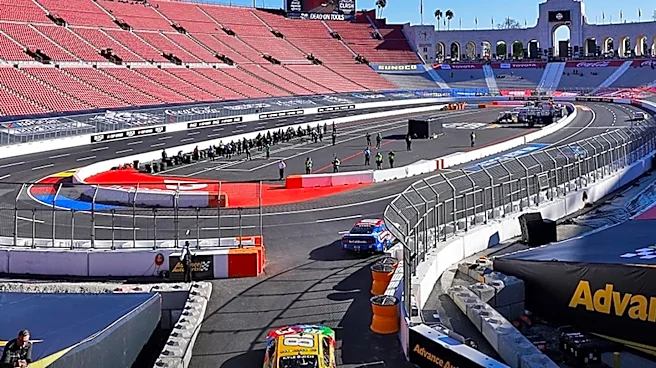










Stock car racing has a rich history that traces back to the Prohibition era in the United States. What began as a necessity for moonshine runners to evade law enforcement evolved into a beloved motorsport with a massive following. This article delves into the origins of stock car racing, its transformation over the decades, and the pivotal role NASCAR played in shaping the sport.
The Roots of Stock Car Racing
Stock car racing's origins are deeply intertwined with the Prohibition
era of the 1920s. During this time, moonshine runners in the Appalachian region needed fast, reliable cars to transport illegal alcohol while evading the authorities. These drivers modified their vehicles for speed and handling, often enhancing their engines and suspensions while maintaining a stock appearance to avoid drawing attention.
As Prohibition ended in 1933, the demand for moonshine persisted, and so did the need for fast cars. The drivers, who had honed their skills on the backroads, began organizing informal races to showcase their driving prowess. These races quickly gained popularity in the rural South, particularly in North Carolina, where the sport's roots are most closely associated.
The Birth of NASCAR
The lack of standardized rules and regulations in early stock car racing led to chaos and disputes among drivers and promoters. Recognizing the need for organization, Bill France Sr. took the initiative to unify the sport. In 1947, he convened a meeting at the Streamline Hotel in Daytona Beach, Florida, with other influential figures in the racing community. This meeting resulted in the formation of the National Association for Stock Car Auto Racing (NASCAR) on February 21, 1948.
NASCAR's establishment brought structure to stock car racing, introducing standardized rules and regulations. The organization initially featured three divisions: Modified, Roadster, and Strictly Stock. While the Roadster division was short-lived, the Modified division evolved into the NASCAR Whelen Modified Tour, and the Strictly Stock division became the premier NASCAR Cup Series.
The Rise of NASCAR and Its Impact
NASCAR quickly gained traction, with its first official race held at Charlotte Speedway on June 19, 1949. The sport's popularity soared, attracting large crowds and media attention. The introduction of the Winston Cup Series in 1971, sponsored by R.J. Reynolds Tobacco Company, marked a significant turning point. The series brought increased prize money and a new points system, further professionalizing the sport.
Over the years, NASCAR expanded its reach beyond the United States, with races held in Canada, Mexico, and Europe. The organization also introduced new series, such as the NASCAR O'Reilly Auto Parts Series and the NASCAR Craftsman Truck Series, catering to different levels of competition and vehicle types.
NASCAR's influence extended beyond the racetrack, impacting car manufacturers and the automotive industry. The "win on Sunday, sell on Monday" mantra highlighted the connection between racing success and consumer interest in performance vehicles. This relationship spurred technological advancements in car design and engineering, benefiting both the sport and the automotive market.
Conclusion
From its humble beginnings as a necessity for moonshine runners to its current status as a major motorsport, stock car racing has undergone a remarkable transformation. NASCAR's establishment played a crucial role in organizing and popularizing the sport, turning it into a cultural phenomenon. Today, stock car racing continues to captivate audiences worldwide, with NASCAR at the forefront of its evolution.