
Viparita Dandasana, also known as Inverted Staff Pose, is a significant inverted back-bending asana practiced in modern yoga. Its Sanskrit name, Viparita Dandasana, directly translates to Inverted Staff Pose, reflecting
its unique form. This posture can be executed with both feet firmly on the ground or with one leg extended straight upwards, offering variations for practitioners of different skill levels. It is recognized as a challenging pose that requires strength, flexibility, and balance, making it a staple in advanced yoga sequences.
Entering the Pose: Foundations and Variations
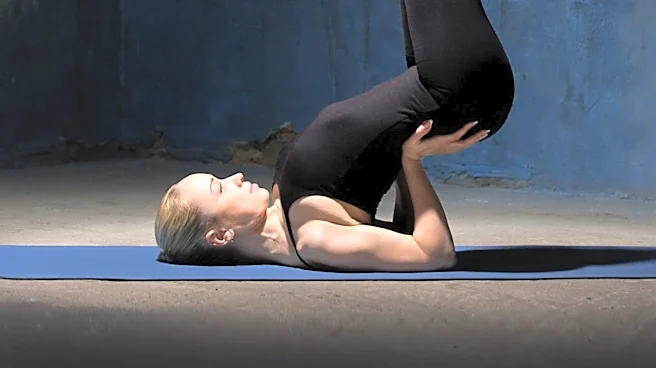
The journey into Viparita Dandasana typically begins from a supine position, lying on the back. To initiate the pose, the hands and feet are positioned close to the body, similar to the setup for an upward bow pose. From this foundation, the body is lifted, allowing the crown of the head to gently rest on the floor. This initial lift establishes the inverted aspect of the pose.
Once the head is supported, the legs are then straightened to form the two-legged variation, known as Dvi Pada Viparita Dandasana. In this stage, the hands are often adjusted to hold the head, mimicking the hand placement in a yoga headstand, or Sirsasana. This careful alignment ensures stability and support throughout the posture. The ability to transition smoothly into and out of this pose is a hallmark of advanced practice.
Advanced Entries and Single-Leg Extensions
For more experienced practitioners, Viparita Dandasana can be entered from Sirsasana, the headstand. This advanced entry involves arching the back from the headstand position, gradually lowering the legs towards the floor, and then straightening them into the full pose. This method demonstrates a high level of control and body awareness, showcasing the practitioner's mastery of inversions and backbends.
Further extending the challenge, the one-legged variation, Eka Pada Viparita Dandasana, can be achieved by raising one leg straight up vertically from the two-legged pose. This variation intensifies the stretch and balance requirements, demanding even greater strength and focus. The leg is held stretched straight out, emphasizing the length and extension through the body. Advanced students also have the option to exit the asana by returning to Sirsasana, demonstrating a seamless flow between complex postures.
Viparita Dandasana in Ashtanga Vinyasa Yoga
Viparita Dandasana holds a prominent place within the Advanced A Series of Ashtanga Vinyasa Yoga. Its inclusion in such a demanding series underscores its complexity and the level of physical prowess it requires. Ashtanga Vinyasa Yoga is known for its rigorous and structured sequences, where each pose builds upon the previous one, preparing the body for more challenging asanas. Viparita Dandasana serves as a peak pose within this advanced series, pushing practitioners to refine their strength, flexibility, and mental concentration.
The practice of Viparita Dandasana in Ashtanga Vinyasa Yoga is not merely about physical execution but also about cultivating a deeper connection between breath and movement. The precise entry and exit points, along with the sustained hold, contribute to the meditative aspect of the practice. This pose, therefore, is not just a physical exercise but a comprehensive practice that integrates body, mind, and breath.