





Quinoa, scientifically known as *Chenopodium quinoa*, is a fascinating annual plant that has garnered significant attention in recent years, often lauded as a superfood. Despite its common perception as a grain, quinoa is botanically classified as a pseudocereal, belonging to the Amaranthaceae family, which also includes familiar plants like spinach and beets. This distinction means it is not a grass, unlike true cereals. Originating in the Andean
region, quinoa has a rich history of cultivation spanning thousands of years, with its unique nutritional profile and adaptability making it a valuable crop both historically and in contemporary agriculture.
Botanical Identity and Physical Traits
Quinoa is a dicotyledonous annual plant that typically grows to a height of about 3 to 7 feet (1 to 2 meters). Its physical characteristics can vary significantly depending on the specific subspecies and variety. The plant features broad, often powdery and hairy, lobed leaves that are usually arranged alternately along the stem. The central stem, which can be woody, may be branched or unbranched and can display a range of colors, including green, red, or purple, depending on the variety.
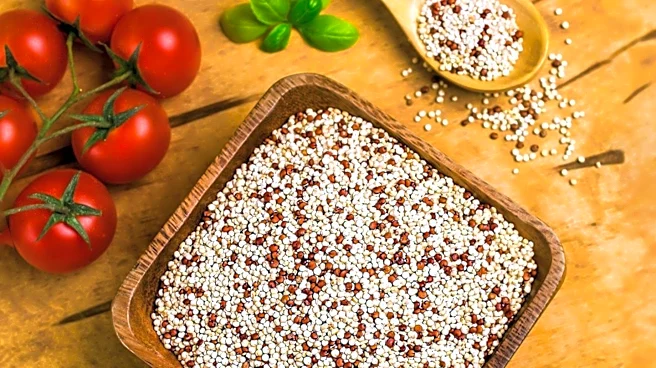
Flowering panicles emerge either from the top of the plant or from the leaf axils along the stem. Each panicle has a central axis from which secondary axes bearing flowers, or tertiary axes carrying flowers, develop. The flowers themselves are small, incomplete, and sessile, matching the color of their sepals. Both pistillate (female) and perfect (containing both male and female parts) forms of flowers exist. A perfect flower typically has five sepals, five anthers, and a superior ovary from which two to three stigmatic branches emerge. While generally self-fertilizing, cross-pollination can occur. The fruits, which are the seeds, are approximately 2 millimeters in diameter and come in various colors, such as white, red, or black, depending on the cultivar.
A History of Domestication and Cultivation
The domestication of quinoa is believed to have occurred between 6,000 and 7,000 years ago in the Andean region, specifically around Lake Titicaca, an area spanning the Bolivian and Peruvian Andes at an altitude of 3,800 meters. Archaeological evidence supports this ancient history, with quinoa remains found in Ayacucho, Peru, dating back to 5000 BC, and seeds discovered in funerary contexts in Chinchorro, Chile, from 3000 BC. Traces have also been found in Bolivia from 750 BC. These findings suggest that domestication took place in the south-central Andes before 3000 BC.
Over millennia, indigenous Andean farmers actively managed and cultivated quinoa, leading to its remarkable genetic diversity and adaptation to five distinct ecotypes. This process of domestication resulted in several significant changes, including a notable increase in the size of the stem, inflorescence, and seeds. It also led to the inflorescence being positioned at the end of the stem, the loss of natural seed dispersal mechanisms at maturity, and varied levels of pigmentation in the plant. This extensive biodiversity is largely preserved in situ by Andean farmers in their fields.
Global Expansion and Economic Impact
For centuries, quinoa remained primarily a staple crop in the Andean region. However, in the early 2000s, global interest in quinoa surged, leading to a significant increase in demand and prices. Between 2004 and 2011, quinoa became a highly sought-after commodity, with Bolivia and Peru being the primary producers. This boom saw a quadrupling of prices paid to producers, leading to a doubling of production between 2011 and 2014, reaching a record 186,147 tons in 2014.
By 2013, quinoa was being cultivated in approximately 70 countries, a stark contrast to the eight countries producing it in the 1980s. This global expansion included countries like Kenya, India, the United States, and various European nations. The increased consumption in North America, Europe, and Australasia contributed to this growth. However, this rapid expansion also led to concerns about food security for indigenous consumers, unsustainable intensive farming practices, and the expansion of agriculture into marginal lands, threatening both the sustainability of producer agriculture and the biodiversity of quinoa. Despite these challenges, efforts are being made to ensure wider distribution and understanding of quinoa's nutritional importance, particularly for vulnerable populations.