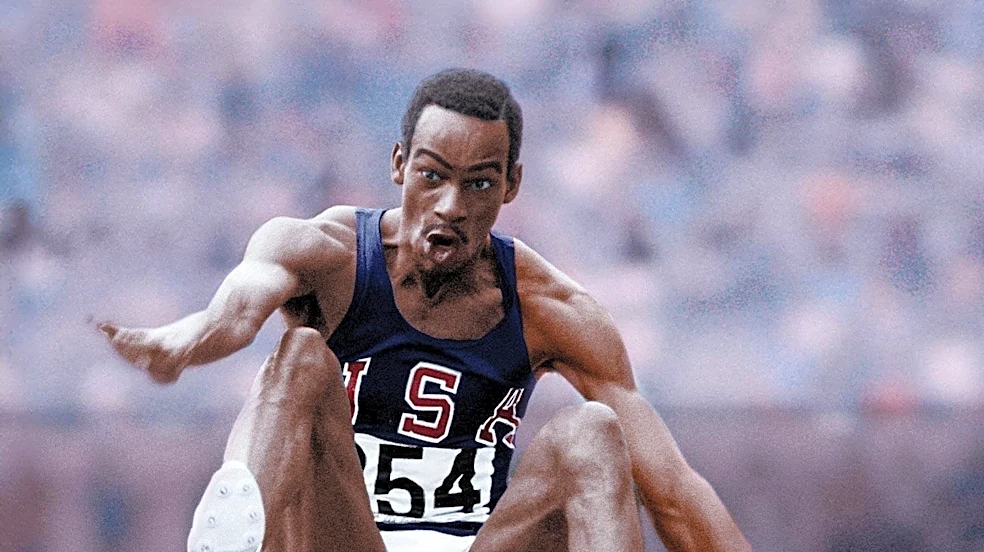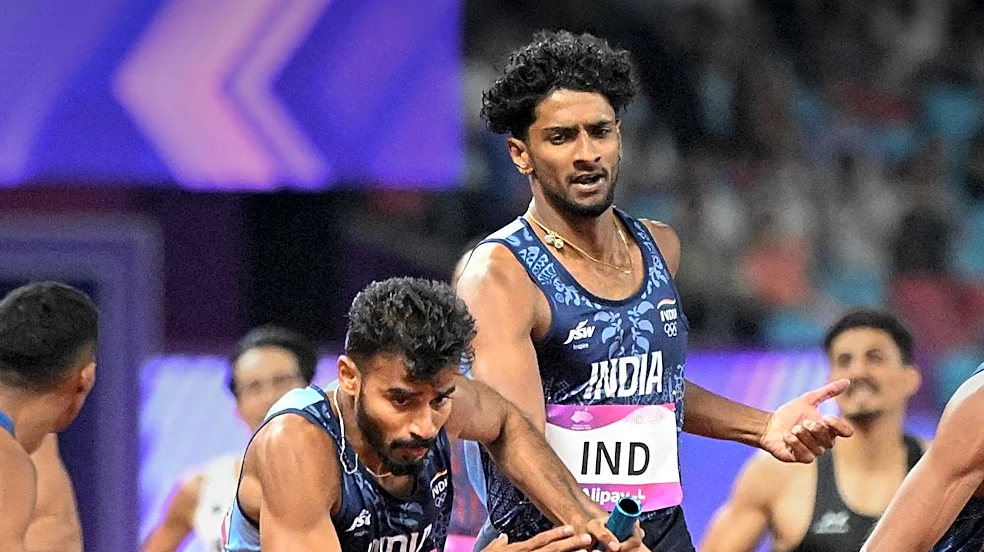





The men's 4 × 100 meters relay event at the 1968 Summer Olympics in Mexico City was a spectacle of speed, strategy, and unexpected turns. Held on Saturday and Sunday, October 19 and 20, 1968, the event featured 19 competing nations. This race not only culminated in a world record for the United States but also showcased the critical importance of seamless baton exchanges and strategic lane assignments. The journey to the final was marked by impressive
performances, including Jamaica's record-equaling and record-breaking runs in the preliminary rounds.
Pre-Race Records and Seeding Challenges
Before the final, the stage was already set for a fast race. During the heats, Jamaica had demonstrated their prowess by equaling the existing world record with a time of 38.6 seconds, which translated to 38.65 seconds with fully automatic timing. They further improved upon this in the semi-finals, clocking an even faster 38.3 seconds (38.39 fully automatic timing). Despite these impressive preliminary times, the random seeding for the final presented a challenge. Jamaica, as the winner of semifinal 1 with the fastest time, was placed in lane 5. However, Cuba, the winner of semifinal 2, found themselves in the less favorable lane one, and the United States, the runner-up in semifinal 2, was assigned lane 2. These inner lanes were generally regarded as inferior, adding an element of unpredictability to the final.
The Dramatic Final Race
The final race was a dramatic affair, characterized by a strong start, critical handoff errors, and a powerful finish. Charles Greene of the United States got off to a quick start, but the American team struggled with poor handoffs early on. This allowed East Germany, running in lane 4, to establish a clear lead on the backstretch. Jamaica and Cuba were the closest competitors to East Germany, with Mel Pender of the U.S. team working hard to catch up. As the race progressed through the turn, Ronnie Ray Smith of the U.S. continued to chase Pablo Montes of Cuba.
East Germany maintained its lead heading into the final handoff, with the U.S. still trailing Cuba. However, a smooth handoff for the American team, combined with East Germany's struggles—taking three attempts to complete their final exchange and losing significant ground—changed the dynamic. France also found itself in a competitive position. Once Jim Hines received the baton for the U.S., he proved to be clearly faster than Enrique Figuerola of Cuba, catching him halfway down the straightaway and powering to a two-meter victory. Lennox Miller of Jamaica also outran Harald Eggers of East Germany, but Roger Bambuck of France managed to hold off Miller, diving for the bronze medal.
A New World Record and Lasting Impact
The United States' victory resulted in a fully automatic timing world record that surpassed the previous hand-timed mark established before the Olympics. This achievement was particularly significant as it highlighted the precision of the new timing technology. Interestingly, Lennox Miller had been the anchor for the previous record and also for the two Jamaican records set earlier in the competition. However, a 1967 USC record, which also featured Miller, was never officially accepted as a world record by the IAAF because Miller was from a different country than his teammates, who included Earl McCullouch and O. J. Simpson. The 1968 men's 4 x 100 meters relay remains a memorable event, not just for the records broken, but for the intense competition and the crucial role of teamwork and execution.