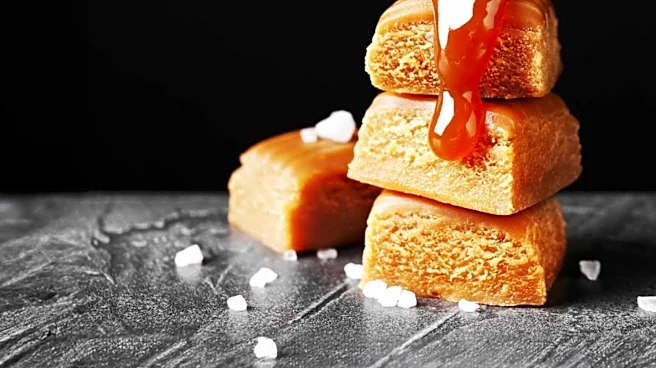







Salted caramel, a flavor combination that has captivated palates worldwide, boasts a history stretching back to the 19th century. What began as a regional culinary tradition in France has evolved into a global phenomenon, influencing everything from high-end desserts to mass-market beverages. This unique pairing of sweet and savory, once a niche delight, has undergone a remarkable journey, demonstrating how specific cultural practices can spread and transform
into widespread trends.
Early Origins in Brittany
The roots of salted caramel can be traced to the Brittany region of France, where, as early as the 19th century, baked goods featuring caramelized sugar and salted dough were already a part of the local cuisine. A notable example is the kouign-amann, a traditional Breton cake, which prominently showcased this sweet and salty combination. This regional preference for incorporating salt with caramelized sugar laid the groundwork for future developments in confectionery.
Following World War II, during the early 20th century, the concept of pairing salted dough with caramelized sugar expanded beyond baked goods into other types of pastries and cakes. By 1946, salted caramel sweets made with milk or butter were being sold in Brittany, reviving recipes that had been in use even before the war. Products like the Quiberon niniche and Salidou spread gained popularity in Brittany during the late 1940s and 1950s, becoming early examples of commercially available salted caramel treats. However, these early versions, often containing milk or butter, were perishable, which limited their widespread commercialization.
Henri Le Roux and the Modern Era
A pivotal moment in the history of salted caramel occurred in 1977, when French pastry chef Henri Le Roux developed a significantly more stable salted caramel sweet. Working in Quiberon, Brittany, Le Roux created a salted butter caramel with crushed nuts, known as caramel au beurre salé, utilizing Breton demi-sel butter. This innovation addressed the perishability issue that had previously hindered broader distribution. His creation was recognized as the "Best confectionery in France" (Meilleur Bonbon de France) at the Paris Salon International de la Confiserie in 1980, and he subsequently registered the trademark "CBS" (caramel au beurre salé) the following year.
Le Roux's stable salted caramel sweet quickly gained immense popularity throughout France and other French-speaking European countries, including Belgium and Switzerland, which already had a strong tradition of fine chocolate and confectionery. For many years, children in these regions enjoyed salted caramel as part of their goûter, an afternoon meal typically consisting of bread with jam or caramel spread, croissants, fruit, and hot chocolate.
Global Popularity and Hedonic Escalation
The late 1990s marked another significant turning point with Parisian pastry chef Pierre Hermé introducing his salted butter and caramel macarons. By the year 2000, high-end chefs began incorporating a touch of salt into their caramel and chocolate dishes, signaling a growing trend. The flavor combination truly entered the mass market around 2008, when major brands like Häagen-Dazs and Starbucks started offering salted caramel products. Initially confined to desserts, salted caramel's versatility led to its use in a wider range of applications, including hot chocolate and even spirits like vodka.
A 2017 study conducted by the University of Florida offered an intriguing explanation for salted caramel's widespread appeal, suggesting its popularity might stem from its effects on the human brain's reward systems. This phenomenon, termed "hedonic escalation," proposes that the complex flavor profile of salted caramel encourages the brain to produce more endogenous opioids than other foods, thereby encouraging further consumption. This scientific insight helps explain why this once-regional specialty has become such a beloved and enduring culinary sensation.