








Damselfish, belonging to the family Pomacentridae, represent a broad group of fish found across tropical, subtropical, and temperate marine environments globally. This family encompasses a wide range of species, each adapted to specific ecological niches, exhibiting diverse physical characteristics, habitat preferences, and foraging strategies. From the vibrant colors that make them popular in aquaria to their specialized feeding habits, damselfish
showcase significant biological diversity.
Their adaptability allows them to thrive in various aquatic settings, from the intricate structures of coral reefs to the silty substrates of lagoons. Understanding this diversity provides a comprehensive view of their ecological significance and the factors influencing their survival.
Physical Traits and Size Variation
Most damselfish species are relatively small, but their size can vary considerably. While many are compact, some of the largest species, such as *Hypsypops rubicundus* (Garibaldi), *Microspathodon bairdii*, *M. dorsalis*, and *Nexilosus latifrons*, can reach lengths of up to 30 centimeters (12 inches). These larger species are sometimes collectively known as giant damselfishes. The family generally exhibits an orbiculate to elongated body shape, often laterally compressed, and they typically have small to medium-sized ctenoid scales.
Damselfish are also known for their striking coloration, predominantly displaying bright shades of yellow, red, orange, and blue, although some species can be a more subdued brown, black, or gray. Interestingly, the young of many species often exhibit different, brighter colors than their adult counterparts. They possess one or two rows of teeth, which can be conical or spatulate, and usually have a single nostril on each side, though some species of *Chromis* and *Dascyllus* have two.
Diverse Habitats and Distribution
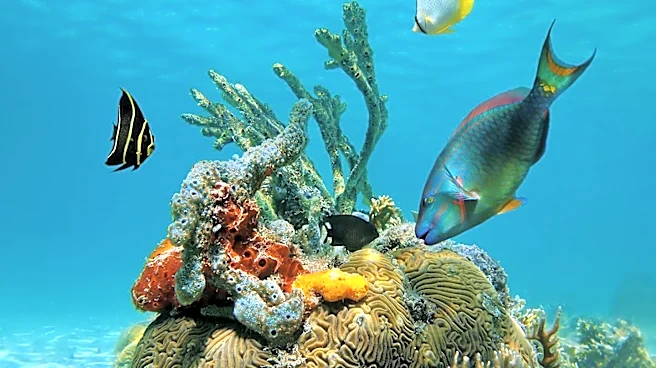
Damselfish inhabit a wide array of marine environments. Many species are found in tropical rocky or coral reefs, where they are often kept as marine aquarium pets due to their vibrant appearance. However, their distribution extends beyond these typical reef settings. Some species are adapted to brackish or even fresh waters, while others, like the large orange Garibaldi, thrive in warm subtropical climates along the coasts of southern California and Pacific Mexico.
Most species are found on or near coral reefs in the Indo-West Pacific, with the area from the Philippines to Australia hosting the greatest concentration of species. While most members of the family prefer shallow waters, typically from 2 to 15 meters deep, some species, such as *Chromis abyssus*, can be found at depths exceeding 100 meters. Many damselfish are specialists, occupying specific parts of the reef, including sandy lagoons, steep reef slopes, or areas exposed to strong wave action, often relying on coral for shelter.
Foraging Strategies and Diet
Damselfish exhibit varied foraging behaviors and diets, reflecting their diverse habitats. They can be omnivorous or herbivorous, feeding on a range of items including algae, plankton, and small bottom-dwelling crustaceans. For example, the domino damselfish (*D. albisella*) spends over 85% of its daytime hours foraging, primarily on caridea and copepods. Larger individuals of this species tend to forage higher in the water column where plankton flux is greater, while smaller fish forage closer to their substrates, possibly due to predation pressures.
Feeding rates for the domino damselfish tend to be higher when currents are faster, and they adjust their foraging height based on current speeds, moving closer to the bottom as currents increase. The lagoon damselfish, a detritivore, possesses up to three times the number of gill rakers compared to other damselfish, enabling it to feed on fine detritus, though it also consumes small amounts of algae and invertebrates. Only a small number of damselfish genera, such as *Cheiloprion*, are known to eat the coral where they live, highlighting the specialized nature of their diets.