








Fort Necessity, located in present-day Farmington, Pennsylvania, played a crucial role in the early stages of the French and Indian War. Constructed by George Washington in 1754, the fort was intended to serve as a defensive position against French forces. Despite its eventual surrender, Fort Necessity's strategic location and the events surrounding its construction and battle highlight the broader geopolitical tensions between the British and French in North
America.
The Geopolitical Context
In the mid-18th century, the Ohio Country was a region of significant strategic importance. Both the British and French sought control over this area due to its rich resources and potential for expansion. The French had established a series of forts to solidify their claim, while British traders and settlers pushed into the region, leading to inevitable clashes.
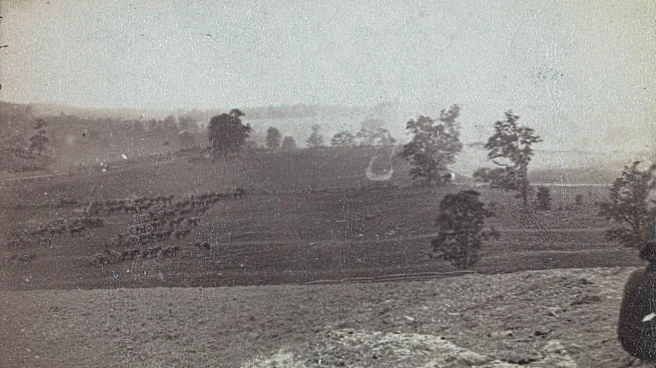
The construction of Fort Necessity was a direct response to these tensions. George Washington, tasked by Governor Dinwiddie of Virginia, was sent to the frontier to defend British interests. The fort was built on an alpine meadow west of the summit of a pass through the Laurel Highlands of the Allegheny Mountains, a location chosen for its strategic value. However, the fort's position was vulnerable, surrounded by highlands that allowed enemy forces to easily bombard it.
The Battle and Its Consequences
The Battle of Fort Necessity, fought on July 3, 1754, was a significant event in the French and Indian War. French and Indian forces, led by Louis Coulon de Villiers, attacked the fort, forcing Washington's troops to surrender. The defeat was a blow to British colonial ambitions and marked the beginning of the French and Indian War.
Despite the loss, the battle demonstrated the strategic importance of the Ohio Country and the role of fortifications in controlling territory. The French victory at Fort Necessity allowed them to maintain their hold on the region, while the British were forced to reconsider their approach to expansion and defense.
The Legacy of Fort Necessity
Fort Necessity's legacy extends beyond its role in the French and Indian War. The battle highlighted the complexities of colonial expansion and the importance of strategic planning in military engagements. It also underscored the significance of alliances with Native American tribes, whose support could tip the balance in favor of one side.
Today, Fort Necessity is preserved as a National Battlefield, serving as a reminder of the early struggles between European powers in North America. The site offers insight into the strategic considerations of the time and the impact of the battle on the course of history. For George Washington, the experience at Fort Necessity was a valuable lesson in leadership and military strategy, shaping his future role in the American Revolutionary War.