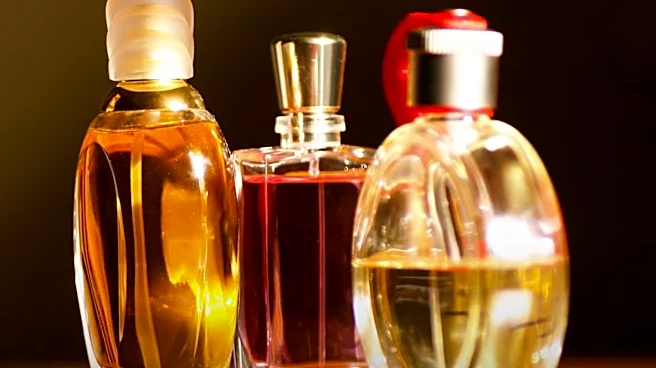



Eau de Cologne, a perfume style that originated in Cologne, Germany, has a rich history spanning over three centuries. First created in 1709 by Italian perfumer Giovanni Maria Farina, this unique fragrance quickly captured the attention of European royalty and eventually became a global sensation. Its journey from a closely guarded secret formula to a widely recognized term for a type of scented formulation is a testament to its enduring appeal and influence
in the world of perfumery.
The Birth of a Scent: Giovanni Maria Farina's Vision
Giovanni Maria Farina, an Italian perfumer from Santa Maria Maggiore Valle Vigezzo, Italy, launched Eau de Cologne in his new hometown of Cologne in 1709. Farina's inspiration for this groundbreaking scent was deeply personal and evocative. In a letter to his brother Jean Baptiste in 1708, he described finding "a fragrance that reminds me of an Italian spring morning, of mountain daffodils and orange blossoms after the rain." This poetic vision led to the creation of a spirit-citrus perfume that he proudly named Eau de Cologne, honoring the city where it was born.
Farina's original formula was a marvel of its time, known for its ability to produce a consistently homogenous fragrance from dozens of monoessences. This innovative approach was considered a sensation, and the perfume was exclusively used as a personal fragrance, delivered to "nearly all royal houses in Europe." The secrecy surrounding its composition contributed to its mystique and exclusivity, solidifying its status as a luxury item among the elite.
The Spread and Commercialization of Eau de Cologne
The success of Eau de Cologne began to expand significantly after free trade was established in Cologne by the French in 1797. This new economic environment opened the floodgates for other entrepreneurs to capitalize on the perfume's popularity. Numerous businessmen started selling their own fragrances under the name "Eau de Cologne," and some even used the Farina name, leading to a proliferation of similar-sounding but distinct products.
Despite the emergence of competitors, Giovanni Maria Farina's original formula has continued to be produced in Cologne since 1709 by the Farina company, located opposite the Jülichplatz. This establishment, which opened its shop at Obenmarspforten in 1709, holds the distinction of being the world's oldest fragrance factory. The original formula remains a closely guarded secret, preserving its unique heritage.
Distinguishing the Original from the Imitators
The widespread adoption of the term "Eau de Cologne" led to a need for differentiation. Other well-known colognes, such as the famous Cologne 4711, named after its location at "Glockengasse No. 4711," share the name but possess distinct scents. This highlights how "Eau de Cologne" evolved from a specific product name to a generic term for a type of fragrance.
Further complicating the lineage, Jean Marie Joseph Farina, a great-great-nephew of the original Giovanni Maria Farina, opened a perfumery business in Paris in 1806. This venture eventually developed into Roger & Gallet, a company that now owns the rights to "Eau de Cologne extra vielle," which is distinct from the "Original Eau de Cologne" from Cologne. This historical divergence underscores the complex evolution of the brand and the term itself, illustrating how a single innovative product can inspire a whole category of fragrances while its original form maintains its unique identity.