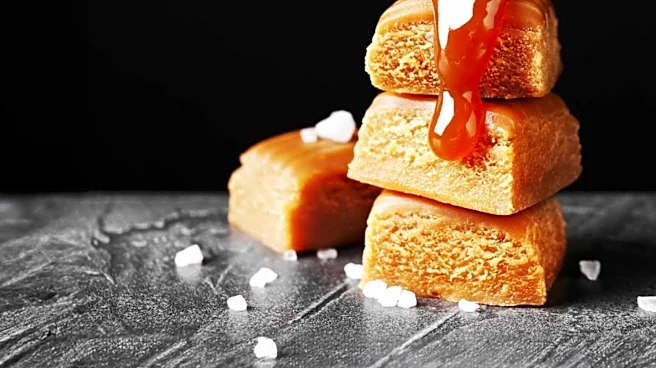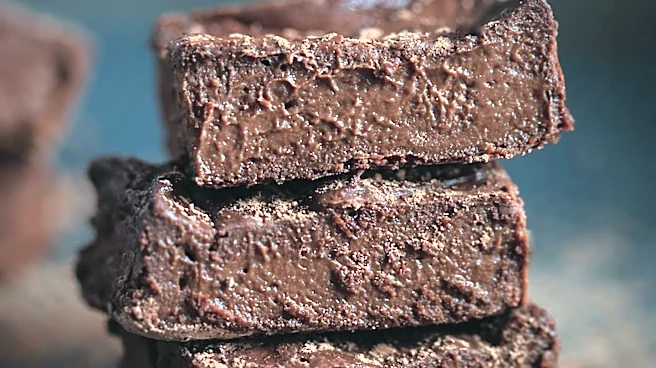









Fudge, a confection made by mixing sugar, butter, and milk, holds a fascinating history rooted in 19th-century United States. What began as an accidental creation quickly evolved into a beloved treat, particularly gaining popularity in American women's colleges by the late 1800s. Its journey from a kitchen mishap to a widespread confection reflects changing tastes and the increasing availability of key ingredients like sugar and chocolate.
Early Origins and Accidental Discoveries
The creation of fudge in America is often characterized as an accidental culinary event. Food writer Lee Edwards Benning, through her own experimentation, suggests that fudge likely emerged when a cook attempted to make a different confection, perhaps by handling the ingredients for caramel as if making a fondant. This theory points to a serendipitous moment in the kitchen where a new sweet was born from an unexpected combination of technique and ingredients.Prior to
what we recognize as modern fudge, "chocolate caramels" were popular in the United States during the 1860s and 1870s. These confections, made by boiling milk, brown sugar, chocolate, and butter, shared a close resemblance in ingredient ratios and technique to contemporary fudge. Food writer Stella Parks even characterizes these early "chocolate caramels" as a type of fudge. An example of such a recipe, published in 1874 in the American agricultural magazine *The Cultivator and Country Gentleman*, credited a "Baltimore friend" for a "Caramel" recipe that called for Baker's chocolate, brown sugar, butter, and milk or cream, boiled for 20 minutes with constant stirring.
From Crumbly to Smooth: The Evolution of Texture and Popularity
Unlike the smooth texture of modern fudge, these early versions, including the 1874 "Caramel" recipe, were consistently stirred during boiling. This continuous stirring led to the sugar crystals crystallizing, resulting in a crumbly texture. Another similar recipe appeared in *The Cultivator and Country Gentleman* later in the decade, again linking the confection to Baltimore. The exact moment when this confection began to be called "fudge" is difficult to pinpoint, partly due to the widespread colloquial use of the word "fudge" in the 19th century.By the 1880s and 1890s, mentions and recipes for fudge became common in American periodicals and advertisements. This surge in popularity coincided with the decreasing prices of sugar and chocolate, making the ingredients more accessible to a wider audience. Early fudge was typically cut into squares and diamonds and marketed as a wholesome and chaste treat, contrasting with the perceptions of other contemporary confections like luxury bonbons and penny candy. Beyond chocolate, early fudge varieties were often flavored with butterscotch, coconut, maple sugar, and vanilla.
The Transition to Modern Fudge
The process by which fudge transitioned from a crumbly confection to the smooth treat we know today is not definitively known. However, Stella Parks suggests that this change might have been a consequence of "sheer neglect." This theory proposes that if fudge was left to cook over lower temperatures without constant stirring, the sugar crystals would not fully crystallize, leading to a smoother texture. This shift in preparation technique, whether intentional or accidental, played a crucial role in shaping the characteristics of modern fudge.In Britain, various communities in the Midlands and Cornwall had been making local variations of the Scottish sweet, tablet, for centuries. These confections, which shared similar ingredients with fudge, would retroactively be referred to as fudge by the 1890s. Cornish fudge, in particular, traces its origins to the 18th century, when Cornish confectioners began using clotted cream instead of milk to create their traditional version of tablet. This highlights a parallel evolution of similar confections across different regions, eventually converging under the broader term of "fudge."