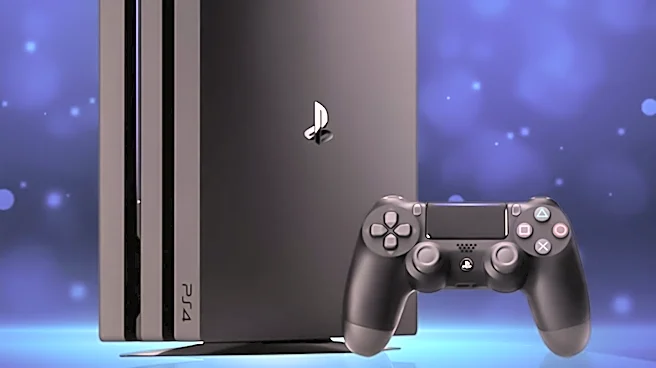





The PlayStation 4 (PS4), a home video game console developed by Sony Interactive Entertainment, marked a significant evolution in gaming when it was announced in February 2013 as the successor to the PlayStation 3. Launched in North America on November 15, 2013, and subsequently in other major markets, the PS4 distinguished itself with a strong emphasis on social interaction and seamless integration with other devices and services. This design philosophy
aimed to create a more connected and shared gaming experience for its users, moving beyond the traditional solitary console experience.
Embracing Social Connectivity and Device Integration
One of the defining characteristics of the PlayStation 4 was its commitment to social interaction. Sony designed the console to facilitate new ways for players to connect and share their gaming experiences. This included features like "Remote Play," which allowed users to play games off-console on devices such as the PlayStation Vita and other supported platforms. This extended the gaming experience beyond the living room TV, offering flexibility and convenience to players.
Beyond remote play, the PS4 also introduced robust online sharing capabilities. Players could stream their gameplay online, allowing friends and other users to watch their sessions. A particularly innovative feature was "Share Play," which enabled friends to remotely control gameplay, effectively allowing them to join in or assist with a game even if they didn't own it themselves. This focus on sharing and connectivity was a direct response to evolving consumer needs and a clear differentiator in the console market.
Critical Acclaim and Market Success
The PlayStation 4 was met with critical acclaim upon its release. Critics widely praised Sony for its responsiveness to consumer needs, particularly its embrace of independent game development. This approach contrasted with some of the restrictive digital rights management schemes initially proposed by competitors, which Sony notably avoided. The console's capabilities were also lauded by critics and third-party studios even before its launch, highlighting its potential for enhanced gaming experiences.
This positive reception translated into significant market success. By October 2019, the PS4 had become the second best-selling PlayStation console of all time, a testament to its popularity and the effectiveness of its design choices. Its strong performance helped Sony achieve top global console sales, demonstrating that its focus on social features, developer support, and consumer-friendly policies resonated deeply with the gaming community.
Hardware Evolution: Slim and Pro Models
In September 2016, Sony refreshed the PlayStation 4 lineup with two new hardware revisions. The first was a smaller, updated version of the original PS4 model, popularly known as the "Slim" model. This revision offered a more compact form factor while maintaining the core functionalities of the original console. This was a common strategy in the console market, providing a more streamlined option for consumers.
Alongside the Slim model, Sony also introduced the PlayStation 4 Pro, a high-end version designed for enhanced performance. The PS4 Pro featured an upgraded GPU and a higher CPU clock rate, enabling it to support enhanced performance and 4K resolution in compatible games. This move allowed Sony to cater to players seeking a more premium visual and performance experience, ensuring the PS4 ecosystem remained competitive and offered options for different user preferences. All existing software remained compatible between the original, Slim, and Pro models, ensuring a unified gaming library across the PS4 family.