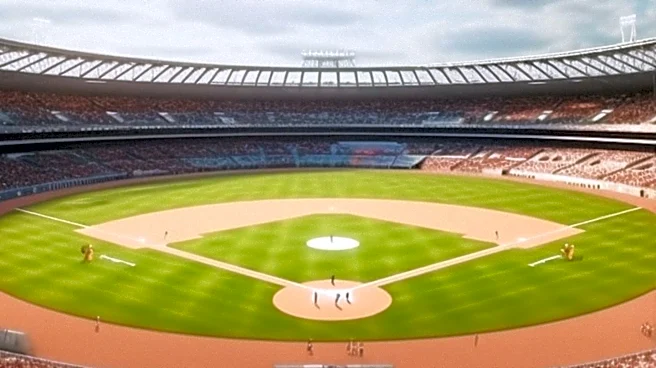


While primarily celebrated as the long-time home of the New York Giants baseball team, the Polo Grounds was a versatile sports venue that hosted a wide array of events beyond America's pastime. From early college football rivalries to various forms of motorsports, the stadium played a significant role in New York City's athletic landscape. However, its history is also marked by somber and tragic incidents, including the only fatality from an on-field
injury in Major League Baseball history and a fatal shooting during a game, underscoring the complex and sometimes dark chapters of its existence.
A Multi-Sport Venue
From its earliest days, the Polo Grounds was not exclusively a baseball stadium. The original Polo Grounds, opened in 1879, was initially built for the sport of polo. After its conversion to a baseball venue, it continued to host other sports. College baseball and football games were common, even featuring teams from outside New York. Notable early contests included a baseball game between Yale University and Princeton University in 1882, and traditional Thanksgiving Day football games between Yale and Harvard in 1883 and 1887.
In its later iterations, particularly Polo Grounds III and IV, the stadium continued its multi-sport tradition. Other sporting events held there included soccer, boxing, and Gaelic football. The venue also served as the home for the New York Giants NFL team from 1925 to 1955. Its final sporting event was a professional football game between the New York Jets and the Buffalo Bills, showcasing its enduring role in football even after the baseball Giants had departed.
The Era of Motorsports
Adding to its diverse history, the Polo Grounds became a site for motorsports in its later years. The venue featured three distinct oval tracks over time. The first was a quarter-mile dirt oval, which hosted midget racing events in 1940 and 1941. A brief foray into board track racing occurred in 1948 with a one-fifth-mile board track. Finally, after the New York Giants baseball team moved to San Francisco, a quarter-mile paved oval was installed, used for stock car racing in 1958 and 1959. These events highlight the stadium's adaptability and its continued use for entertainment even as its primary tenants moved on.
Tragic Incidents at the Polo Grounds
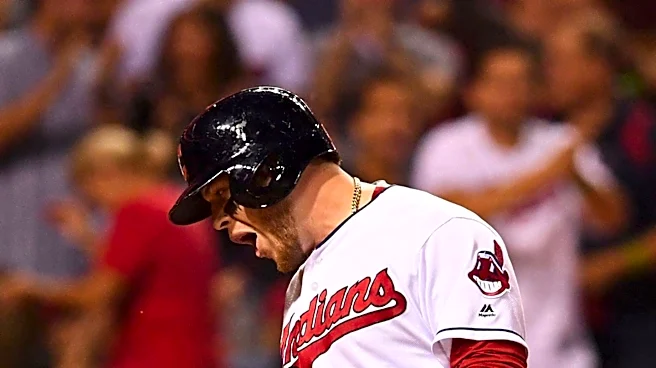
The Polo Grounds is also remembered for two particularly tragic events. On August 16, 1920, Cleveland Indians shortstop Ray Chapman was struck in the head by a pitch thrown by the Yankees' Carl Mays. Chapman, who was not wearing a helmet as batters did not at the time, died 12 hours later on August 17. He remains the only player to die from an injury sustained during a Major League Baseball game, a somber reminder of the sport's inherent dangers.
Another shocking incident occurred on July 4, 1950. Bernard Doyle, a man in his 50s from Fairview, New Jersey, was struck and killed by a stray bullet while seated in the stands, about an hour before a doubleheader between the Dodgers and the Giants was set to begin. A 14-year-old boy later confessed to firing a .45 caliber pistol into the air from a rooftop 1,120 feet away. These tragic events, alongside the many triumphs and spectacles, form an indelible part of the Polo Grounds' complex legacy.