




The advent of sound in motion pictures was a transformative moment in cinematic history, largely spearheaded by the Vitaphone sound-on-disc system. This innovative technology, prominently featured in the 1927 film "The Jazz Singer," allowed for synchronized recorded music, singing, and speech, effectively launching the "talkie" era. Developed by Western Electric, Vitaphone represented a significant leap forward in audio fidelity and amplification,
though it ultimately faced challenges that led to its replacement by sound-on-film systems.
Technical Innovations and Early Advantages
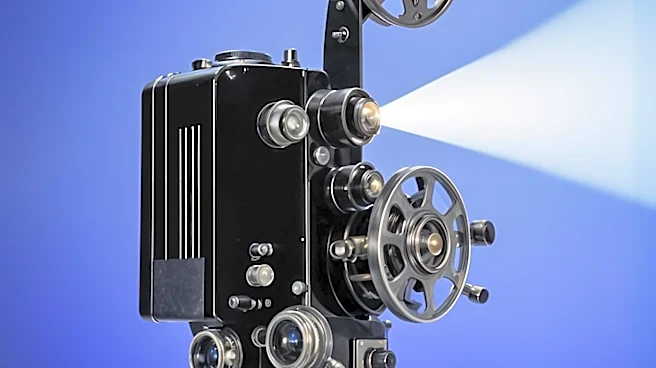
From the perspective of filmmaking, the Vitaphone process involved filming with cameras and operators enclosed in soundproofed booths to minimize noise. Microphones were strategically placed just above camera range, and recording machines were housed in separate buildings to prevent vibrations. Synchronization was maintained by powering all cameras and recorders with synchronous electric motors from a common source. For existing film footage, the film was projected, and the conductor synchronized music with visual cues, with the projector electrically interlocked with the recording machine.
Vitaphone made several crucial improvements over earlier sound systems. It utilized electronic amplification based on Lee De Forest's Audion tube, allowing sound to be played at a comfortable volume for large audiences. The amplifiers and loudspeakers, developed by Western Electric, were state-of-the-art, offering superior performance compared to other available equipment. Furthermore, the system benefited from extensive work on electronic sound recording and reproduction carried out at Western Electric in the early 1920s. Engineers developed a highly sensitive full-frequency-range condenser microphone capable of capturing subtle sounds, along with the necessary electronic and mechanical equipment to record the audio signal. This resulted in a quality of sound that was a revelation to audiences at its public debut in 1926, dramatically surpassing anything previously achieved and even initially outperforming Western Electric's own sound-on-film system in fidelity.
Challenges and Eventual Obsolescence
Despite its initial success and technical advantages, the Vitaphone system faced several inherent challenges that ultimately led to its decline. One major issue was distribution: Vitaphone records had to be shipped alongside film prints, requiring a separate infrastructure from the existing film distribution system. These records were also prone to wear, with audible degradation occurring after an estimated 20 playings, necessitating frequent replacement and adding to costs. Damage and breakage during transport were also constant concerns, often requiring spare sets of discs to be kept on hand.
Synchronization proved to be another significant hurdle. If a record was improperly cued, it would start out of sync with the picture, requiring the projectionist to manually adjust it. An incorrect record meant pausing the show to swap discs and restart the reel. Damage to the film print could also throw off synchronization. While Vitaphone projectors had levers for minor adjustments, precise care was demanded from projectionists, and human error or mechanical malfunction could lead to embarrassing disruptions. Furthermore, the inability to physically edit phonograph records severely limited the creative potential of Vitaphone films, making complex editing a "nightmare" for editors. By the mid-1930s, Warner Bros. and other studios transitioned to sound-on-film recording, which offered greater flexibility and reliability. Although Vitaphone helped popularize theater sound and stimulated the development of modern sound reinforcement systems, its disadvantages in distribution, synchronization, and editing ultimately led to its retirement in favor of more advanced sound-on-film processes.