






Automated Teller Machines (ATMs) are ubiquitous in modern society, providing convenient access to financial services around the clock. While their external appearance might seem simple, the internal architecture of an ATM is a complex interplay of specialized hardware, sophisticated software, and robust security measures designed to ensure reliable and secure transactions. Understanding these components reveals the intricate engineering behind these everyday
banking tools.
Core Hardware Components
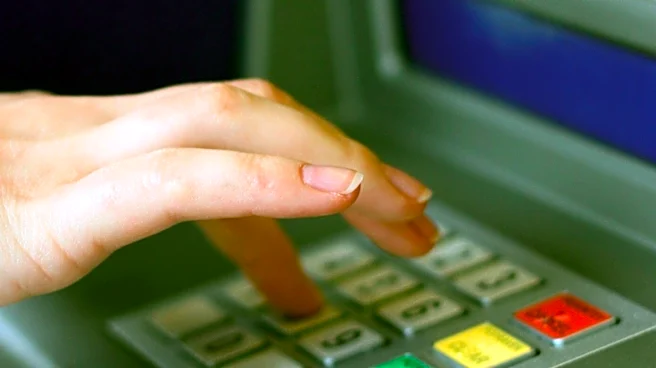
An ATM is essentially a specialized computer system. At its heart is a Central Processing Unit (CPU), which controls the user interface and various transaction devices. To identify the customer, ATMs are equipped with a magnetic or chip card reader. Authentication is primarily handled by a PIN pad, which accepts and encrypts the Personal Identification Number (PIN) entered by the user. This PIN pad is typically manufactured as part of a secure enclosure, often alongside a secure cryptoprocessor, which is crucial for protecting sensitive data.
Customers interact with the ATM through a display and either function key buttons, usually located near the display, or a touchscreen, used to select different transaction options. For record-keeping, a record printer provides customers with a physical receipt of their transaction. Critical components, such as cash dispensing and deposit mechanisms, are housed within a vault, which is designed for restricted access. The entire system is encased in a housing that provides aesthetics and a place for signage. Modern ATMs have increasingly adopted personal computer-like hardware architectures, moving away from custom microcontrollers to use USB connections for peripherals, Ethernet and IP for communications, and standard PC operating systems.
Software and Network Connectivity
The functionality of an ATM relies heavily on its software. While older ATMs might have used operating systems like MS-DOS, RMX 86, OS/2, or Windows 98, newer machines often run on more common operating systems such as Windows 2000, Windows XP, Windows XP Embedded, or Linux. There are even examples of large banks in Brazil replacing MS-DOS with Linux on their ATMs. This shift towards more common operating systems, while offering greater flexibility, can also lead to familiar error messages appearing on ATM screens, similar to those seen on personal computers.
Crucially, most ATMs are connected to interbank networks like NYCE, PULSE, PLUS, Cirrus, and STAR. These networks enable customers to perform transactions at machines not belonging to their own bank, or even in different countries. The authorization of financial transactions is handled by the card issuer or another authorizing institution over these communication networks, often using an ISO 8583 messaging system. All communication traffic between the ATM and the transaction processor is typically encrypted using methods such as SSL to protect personal and financial data.
Security and Reliability
Security is paramount for ATMs. Early ATM manufacturers focused heavily on the physical security of the machines to prevent theft. The vault, which stores items of value like cash, is an integral part of the device's physical security. Manufacturers recommend that the vault be attached to the floor to prevent its removal, although instances of theft by tunneling into the floor have occurred. Vaults are supplied in various grades, such as Underwriters Laboratories UL-291 "Business Hours" and Level 1 Safes, RAL TL-30 derivatives, and CEN EN 1143-1 - CEN III and CEN IV, with selection based on factors like cost, weight, and regulatory requirements.
Beyond physical security, transactional secrecy and integrity are maintained through encryption. While older ATM transactions were encrypted with DES, many processors now require the more secure Triple DES system. To aid in reliability and resolve disputes, many ATMs maintain journaling systems, either printing transactions to a roll-paper journal or posting them to an electronic journal. These records, including access timestamps and the number of notes dispensed, are considered sensitive data and are secured similarly to the cash itself. Despite these measures, challenges like card fraud,