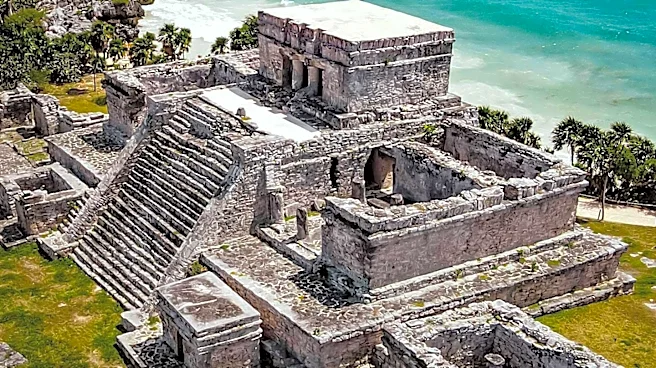







Tulum, a prominent Mayan archaeological site on the Yucatán Peninsula, has been a focal point for researchers seeking to understand the complexities of ancient Mesoamerican civilizations. Perched dramatically on 12-meter-tall cliffs overlooking the Caribbean Sea, the ruins of this walled city offer a unique window into the late Postclassic period of Mayan history. Through extensive archaeological investigations spanning over a century, scholars have
pieced together a narrative of Tulum's development, its strategic importance as a port for Coba, and its eventual abandonment. These efforts have not only illuminated the city's past but also revealed fascinating details about the prehistoric inhabitants of the wider region.
Early Expeditions and Detailed Documentation
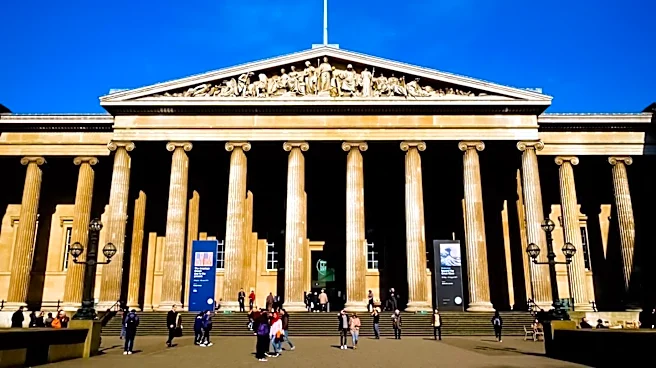
The first detailed description of Tulum's ruins for a wider audience came from the work of John Lloyd Stephens and Frederick Catherwood, published in their 1843 book, "Incidents of Travel in Yucatan." Their arrival by sea provided a striking perspective of the site, particularly the imposing Castillo. Stephens and Catherwood meticulously mapped the city's defensive walls and Catherwood produced detailed sketches of the Castillo and other structures. Their observations also included an early classic stele, inscribed with a date of AD 564, which is now housed in the British Museum. The presence of this stele, likely brought from another location for reuse, suggests a dynamic history of artifact incorporation within Tulum's development. These early documentations laid the groundwork for future archaeological endeavors.
A Century of Scholarly Investigation
Following Stephens and Catherwood, systematic archaeological work at Tulum continued with significant contributions from various scholars. Sylvanus Morley and George P. Howe initiated restoration efforts and opened public access to the site starting in 1913. The Carnegie Institution furthered these efforts from 1916 to 1922. Samuel Lothrop contributed by mapping the site in 1924, providing crucial spatial data. Later, Miguel Ángel Fernández conducted research in the late 1930s and early 1940s, followed by William Sanders in 1956, and Arthur G. Miller in the 1970s. These cumulative investigations were instrumental in determining that Tulum was occupied during the late Postclassic period, specifically around AD 1200, and remained inhabited until the early 16th century when contact with the Spanish was made. The site was ultimately abandoned by the end of the 16th century, marking the conclusion of its active urban life.
Unveiling Prehistoric Life in Cenote Caves
Beyond the ancient city itself, recent archaeological discoveries in the cenote cave systems surrounding Tulum have shed light on even older human presence in the region. In 2016, an underwater archaeological expedition led by Jerónimo Avilés uncovered the skeleton of a female, estimated to be at least 9,900 years old. This discovery, made in a cenote cave, provided invaluable data on early inhabitants. Craniometric measurements indicated that her skull conformed to a mesocephalic pattern, consistent with other ancient skulls found in Tulum's caves. Intriguingly, the skull bore evidence of three scars from hard impacts and crater-like deformations, potentially caused by a bacterial relative of syphilis. While initially thought to be connected to the Chan Hol 2 site, further analysis by Stinnesbeck confirmed that this skeleton represented a distinct individual. These findings suggest the existence of at least two morphologically diverse groups of people living separately in Mexico during the transition from the Pleistocene to the Holocene epochs, offering a deeper understanding of the complex human history of the Yucatán Peninsula.