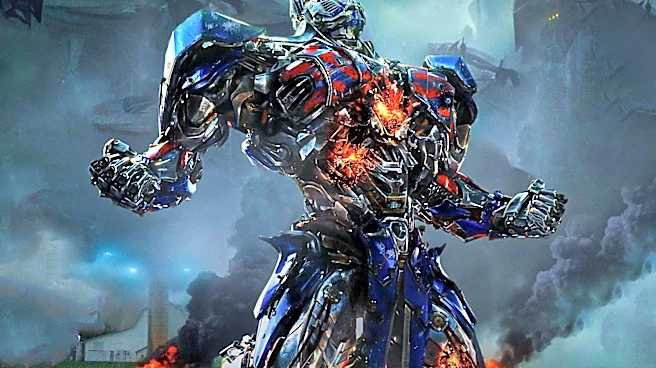






Transformers: Revenge of the Fallen, directed by Michael Bay, is a 2009 American science fiction action film that serves as the sequel to the 2007 Transformers movie. The film's development and production were marked by challenges and innovations that shaped its final form. This article explores the key aspects of the film's development and production process.
Early Development and Script Challenges
The development of Transformers: Revenge of the Fallen began shortly after the release of its
predecessor. Paramount Pictures announced a late June 2009 release date for the sequel in September 2007. However, the production faced significant hurdles, including the 2007-2008 Writers Guild of America strike, which threatened to delay the film's progress.
Director Michael Bay, determined to keep the project on track, began creating animatics of action sequences featuring characters rejected for the 2007 film. This proactive approach allowed animators to continue working on sequences even if the Directors Guild of America went on strike, which ultimately did not happen. Bay's commitment to the project ensured that the film's production remained on schedule.
Writing and Creative Decisions
Screenwriters Roberto Orci and Alex Kurtzman, who had worked on the first film, initially passed on the sequel due to scheduling conflicts. However, the studio eventually convinced them to return, along with Ehren Kruger, who impressed Bay and Hasbro president Brian Goldner with his knowledge of the Transformers mythology.
The writing team faced the challenge of balancing action, humor, and character development. Orci described the film's theme as "being away from home," with the Autobots contemplating living on Earth as they cannot restore Cybertron. The writers aimed to modulate the humor and focus more on the science fiction elements, while Bay wanted to please fans by making the tone darker.
Filming and Visual Effects
Principal photography for Transformers: Revenge of the Fallen took place between May and September 2008, with locations in Egypt, Jordan, Pennsylvania, New Jersey, and California. The film employed advanced visual effects to bring the Transformers to life, with Industrial Light & Magic (ILM) handling the majority of the CGI work.
The visual effects team faced the challenge of creating more complex robots than in the previous film, which required longer rendering times. The film's action sequences were shot using IMAX cameras, providing audiences with a more immersive experience. The combination of practical effects and CGI contributed to the film's visual spectacle.
In summary, the development and production of Transformers: Revenge of the Fallen were characterized by creative challenges and technological innovations. Despite facing obstacles such as the writers' strike, the film's team managed to deliver a visually stunning and action-packed sequel that continued the Transformers saga.