


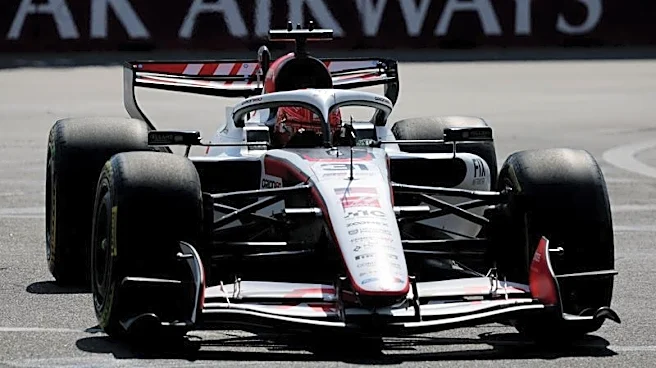
BMW's journey in motorsport has been marked by significant periods of involvement in single-seater racing, particularly in Formula Two and Formula One. These high-stakes categories provided a platform for BMW to push the boundaries of engine technology and chassis design, leading to both triumphs and challenges. From its early post-war successes to a Formula One World Championship, BMW's commitment to single-seater racing has been a defining aspect
of its competitive history, showcasing its engineering prowess on the global stage.
Early Forays and Formula Two Dominance
After World War II, BMW's Model 328 cars were adapted into racing vehicles known as BMW Eigenbau. These cars quickly found success in Formula Two during the late 1940s and early 1950s, competing until 1955. Their performance in this category also saw them participate in Formula One races, demonstrating BMW's early capabilities in open-wheel competition. However, with the introduction of a "new" Formula Two, BMW temporarily shifted its focus away from single-seaters to concentrate on touring car racing.
BMW made a strong return to Formula Two in 1967, supplying 1.6-liter Apfelbeck engines. Drivers like Jo Siffert and Hubert Hahne were at the wheel, initially using Lola T100 cars in 1967 and Lola T102s in 1968. The company introduced its own Lena Terry-designed 269 car in June 1969, though this period was also marked by tragedy with the death of Gerhard Mitter at the 1969 German Grand Prix. Despite this, BMW's Formula Two efforts continued to yield success, with the 270 model securing victories in 1970 with drivers such as Siffert, Hahne, Quester, and Ickx. Quester notably finished fourth in the championship and won in Macau that year.
The Formula One Challenge and Championship Glory
BMW's involvement in Formula Two continued with engine supply to Quester in 1971 and a full factory return in 1973, powering the March team. Jean-Pierre Jarier, driving with a BMW engine, won the Formula Two title that year. BMW remained a successful participant in Formula Two until its dissolution in 1984. Concurrently, BMW harbored ambitions for Formula One. After an initial unsuccessful attempt by Jochen Neerpasch to convince the board, his successor, Dieter Stappert, succeeded in securing BMW's entry into Formula One.
BMW decided to supply turbocharged engines to the Brabham team. These engines were rigorously tested from late 1980 and made their Formula One debut in the 1982 season. This partnership proved highly successful, resulting in nine race victories and, most notably, securing the Drivers' World Championship title for Nelson Piquet in 1983. This achievement marked a significant milestone for BMW in the pinnacle of motorsport. However, BMW announced its withdrawal from Formula One at the end of 1986, selling the rights to its M12/13 engine to Megatron. BMW later returned to Formula One in 1997, partnering with Williams and supplying what were considered the most powerful engines of the era, and then as a factory team, BMW Sauber, from 2006 to 2009, achieving one victory in 2008.