




The epic scale of the film "Spartacus" is significantly enhanced by its original score, composed and conducted by the acclaimed Alex North. North, a six-time Academy Award nominee, crafted a musical backdrop that not only complemented the film's dramatic narrative but also pushed the boundaries of film scoring. His work on "Spartacus" is considered a textbook example of how modernist compositional styles can be effectively integrated with the traditional
Hollywood leitmotif technique, creating a score that is both grand and innovative.
Innovative Instrumentation and Compositional Style
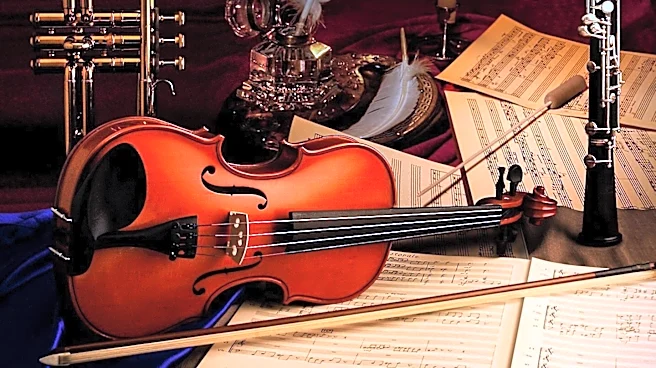
Alex North's approach to the "Spartacus" score was deeply researched and highly experimental. To achieve a unique sound, he gathered a collection of antique instruments. While not all were authentically Roman, instruments such as the sarrusophone, Israeli recorder, Chinese oboe, lute, mandolin, Yugoslav flute, kythara, dulcimer, and bagpipes were utilized to create a strong dramatic effect. His prize instrument was the ondioline, an early electronic synthesizer, which had never before been used in a film score, showcasing North's pioneering spirit.
Much of North's music for "Spartacus" is characterized by its departure from conventional tonality. He often composed without a clear tonal center or flirted with tonality in ways that most film composers of his time would have considered too risky. This innovative approach allowed him to create a score that felt both ancient and modern, perfectly capturing the film's themes of rebellion and freedom. For instance, one particular theme is used to represent both slavery and freedom, but its value changes across different scenes, making it sound like distinct themes depending on the context. The love theme for Spartacus and Varinia stands out as the most accessible melody in the film, while a harsh trumpet figure was specifically created to represent the character of Crassus.
Evolution of the Soundtrack Releases
The original soundtrack album for "Spartacus" was released on LP in 1960, featuring selections from the score totaling 41 minutes. This initial release allowed audiences to experience North's powerful compositions outside of the cinematic context. Decades later, in 1990, this album was re-released on CD, coinciding with the film's significant restoration, which brought renewed attention to both the visual and auditory aspects of the movie.
Following the CD re-release, Varèse Sarabande Records embarked on an ambitious project to re-record 75 minutes of highlights from the score, personally chosen by Alex North himself. The plan was for North's friend and fellow film composer, Jerry Goldsmith, to conduct this re-recording. However, the project faced multiple delays and remained unrecorded when Goldsmith passed away in 2004. Despite this setback, Varèse Sarabande eventually released a limited collector's edition in 2010. This comprehensive set included six CDs, a DVD, and a 168-page booklet. The first disc contained all 72 minutes of the score that survived in stereo, including all music from the 1960 album. Discs two and three featured the entire score in mono, while disc four offered alternate and preliminary cues from the original recording sessions. Discs five and six presented re-recordings of the film's iconic love theme by various modern film composers and musicians. The accompanying DVD included a documentary interviewing these musicians about the score's enduring impact, solidifying Alex North's "Spartacus" score as a timeless masterpiece in film music.