


The Oregon Territory, a significant entity in American westward expansion, existed for just over a decade, from August 14, 1848, to February 14, 1859. Its establishment marked a crucial step in the United States' claim and organization of the Pacific Northwest. This vast region, initially a subject of international dispute, eventually became an incorporated territory, laying the groundwork for several future states. The journey from contested land
to organized territory involved diplomatic agreements, tragic events, and legislative action that shaped the geopolitical landscape of the American West.
From Contested Claims to Treaty Resolution
Before its formal organization, the area that would become the Oregon Territory was known as the Oregon Country, a region subject to overlapping claims by multiple nations. The United States, Great Britain, Spain, and Russia all asserted rights to portions of this valuable land. Through a series of treaties in the early 19th century, these claims were gradually resolved. The Treaty of 1818 established a "joint occupation" between the United States and Great Britain, while separate agreements limited Spanish claims south of the 42nd parallel and Russian claims north of 54 degrees 40 minutes.
The most significant resolution for the future Oregon Territory came with the Oregon Treaty of June 15, 1846. This agreement settled the boundary dispute between the United States and Great Britain, establishing the 49th parallel as the international border between the two nations' North American possessions. This diplomatic achievement brought a large portion of the Oregon Country firmly under U.S. control, though it would remain unorganized for two more years. The resolution of these international claims was a prerequisite for the formal establishment of a U.S. territory in the region.
The Act of Organization and Initial Boundaries
The United States federal government left its newly acquired portion of the Oregon Country unorganized for two years following the 1846 treaty. However, a pivotal event, the Whitman massacre, played a role in accelerating the region's organization. News of this tragedy reached the United States Congress, helping to facilitate the legislative process. On August 14, 1848, Congress passed the "Act to Establish the Territorial Government of Oregon," officially creating the Territory of Oregon.
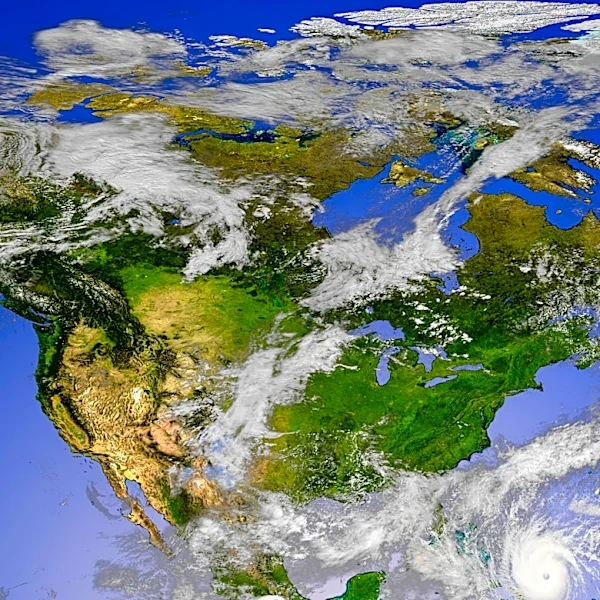
Upon its establishment, the Oregon Territory was immense, encompassing an area far larger than the present-day state of Oregon. Its original boundaries included all of what are now the states of Oregon, Washington, and Idaho. Additionally, it extended to include parts of present-day Montana and Wyoming, specifically those areas west of the Continental Divide. The territory's southern border was defined by the 42nd parallel north, consistent with the Adams-Onís Treaty of 1819, while its northern reach extended to the 49th parallel, as set by the Oregon Treaty. This vast expanse represented a significant acquisition for the United States, stretching from the Pacific Ocean deep into the interior of the continent.
Early Administration and Shifting Capitals
With the formal organization of the territory, the process of establishing a functional government began. The first governor of Oregon Territory arrived in 1849, marking the transition from an unorganized frontier to a structured U.S. territory. The territorial government was designed to oversee the development and administration of this expansive region.
The capital of the Oregon Territory experienced several changes throughout its relatively short existence. Initially, Oregon City served as the capital from 1848 to 1851. Following this, Salem took on the role from 1851 to 1855. For a brief period in 1855, Corvallis was designated as the capital, but it quickly reverted to Salem, which remained the capital until the territory's dissolution in 1859. These shifts in the seat of government reflect the dynamic and evolving nature of the territory as it grew and developed. By 1850, the territory recorded a population of 13,294, indicating a growing presence of settlers within its borders. The establishment of a formal government and the designation of a capital were crucial steps in integrating this frontier region into the broader fabric of the United States.