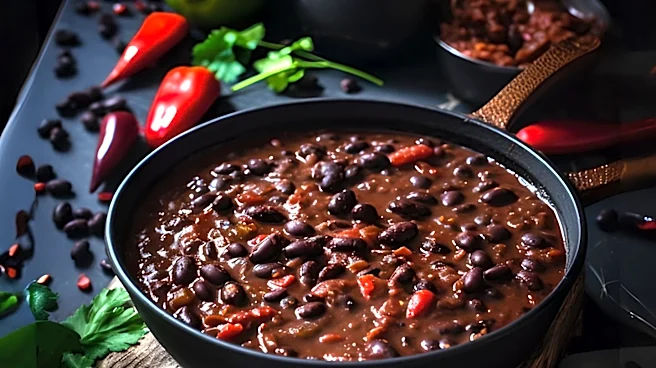










Feijoada, a hearty stew of black beans with various types of pork and beef, stands as a quintessential dish in Brazilian cuisine. Often served with an array of sides including farofa, white rice, sautéed collard greens, and sliced oranges, it is more than just a meal; it's a cultural institution. This popular dish is traditionally enjoyed on Saturday afternoons or Sunday lunches, intended as a leisurely midday meal to be savored throughout the day,
often among extended family during social events like watching a football match. Its rich flavors and heavy ingredients have earned it the moniker of Brazilian soul food, reflecting its deep connection to the country's heritage and social fabric.
Early Mentions and Regional Variations
The earliest known mention of "feijoada à brasileira" dates back to Recife, Pernambuco, in 1827. An advertisement published in the Diário de Pernambuco on March 2, 1827, announced that the Locanda da Águia d'Ouro would serve "excellent Brazilian-style feijoada" on Thursdays for a comfortable price. Later, on August 7, 1833, the newly opened Hôtel Théâtre in Recife also advertised serving "Feijoada à brasileira" on Thursdays, further cementing its presence in the region.
While feijoada is widely recognized as a national dish of Brazil, particularly in Pernambuco and Bahia, other parts of the country also boast their own regional specialties. The preparation and choice of ingredients can vary across Brazil. For instance, in Pernambuco, a modification of the recipe led to the "feijoada pernambucana," which typically uses mulatinho beans instead of the more common black beans. This highlights the dish's adaptability and how local preferences have shaped its evolution over time.
Ingredients and Culinary Descriptions
Oscar Comettant, in an 1860 pamphlet titled "Amor d'um Escravo" published in the Ceará newspaper D. Pedro II, provided a detailed description of feijoada. He noted that the food consisted of salted meat dried in the sun, small but very good black beans, bacon, and a very coarse flour made from cassava root to combine everything. He described the mixture as forming a kind of dark porridge that, despite potentially looking unappealing, possessed a very pleasant taste. Comettant emphasized that feijoada was the important dish of every modest dinner in Brazil, comparing it to the French pot-au-feu and the Spanish puchero.
Beyond these core ingredients, historical records indicate a wider array of components. An 1848 advertisement in a Recife newspaper mentioned the sale of "bacon meat, suitable for feijoadas." A receipt from the Imperial Household dated April 30, 1889, showed consumption of green meat, veal, mutton, pork, sausage, blood sausage, liver, kidneys, tongue, brains, offal, and tripe sauces. This suggests that these ingredients were not exclusively consumed by enslaved people but were also considered delicacies, challenging some popular narratives about the dish's origins.
Social Significance and Modern Traditions
Feijoada has transcended its culinary role to become deeply embedded in Brazilian social life. In the city of São Paulo, it is a typical dish served in working-class restaurants on Wednesdays and Saturdays, especially in commercial areas. In Rio de Janeiro, restaurants traditionally serve it on Fridays. The dish is normally offered with a selection of meats, such as pork, bacon, pig ears, and pig feet, allowing customers to customize their meal. This flexibility and widespread availability underscore its status as a beloved and accessible food.
As a celebratory dish, feijoada is meant to be enjoyed without rush, fostering a sense of community and togetherness. The "feijoada completa" (complete feijoada), accompanied by rice, sliced oranges, sautéed kale, and farofa, was particularly popular at the G. Lobo restaurant in downtown Rio de Janeiro at the end of the 19th century. This establishment, though it disappeared in 1905, played a significant role in popularizing the contemporary recipe across the country. The dish's enduring popularity across all social strata in Brazil, always associated with festivity and celebration, highlights its profound cultural impact, far removed from any connotations of scarcity.