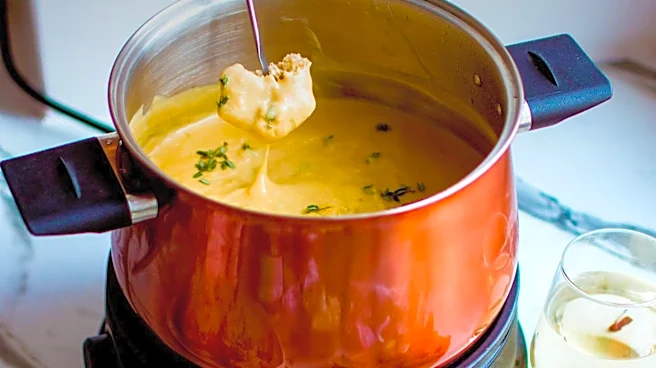









Fondue, a dish with deep Swiss roots, experienced a significant surge in popularity in the United States during the mid-20th century. What began as a strategic promotion by the Swiss Cheese Union eventually blossomed into a widespread culinary trend, transforming fondue into a symbol of sophisticated social gatherings and home entertainment. This American embrace of fondue, particularly in the 1960s and 1970s, marked a distinct chapter in the dish's
global journey, moving it from a European tradition to a beloved party staple.
Introduction to the American Palate
The initial introduction of fondue to the American public can be traced back to the 1939 New York World's Fair. The Swiss Cheese Union, an organization dedicated to increasing cheese consumption, utilized this international stage to promote fondue as a Swiss national dish. This early exposure laid some groundwork, but it was in the post-war era that fondue truly began to capture American attention. The term "fondue" itself, which means 'melted' in French, began to be generalized in the 1950s to include other dishes where food was dipped into a communal pot of hot liquid.A pivotal moment in fondue's American story occurred in 1956 when Swiss restaurateur Konrad Egli introduced fondue bourguignonne at his Chalet Suisse restaurant in New York. This variation, involving dipping meat into hot oil, expanded the concept of fondue beyond just cheese and wine, appealing to a broader range of tastes. This innovation helped to establish fondue as a versatile and exciting dining experience, perfect for social settings.
The Rise of the Fondue Party
The mid-1960s saw another significant development with Egli's invention of chocolate fondue. Created as part of a promotion for Toblerone chocolate, the original recipe featured melted chocolate, heavy cream, and brandy. This sweet version proved to be incredibly popular, especially in New York during the 1970s. The success of chocolate fondue, alongside its savory counterparts, spurred many Americans to purchase their own fondue pots for home use, further fueling the dish's popularity.Fondue's appeal was reinforced at the 1964 New York World's Fair, where it was again promoted to Americans at the Swiss Pavilion's Alpine restaurant. The dish's popularity in the United States reached its peak in the 1960s and 1970s, coinciding with the rise of other foods prepared in chafing dishes. Fondue became a quintessential element of social gatherings and dinner parties, offering an interactive and communal dining experience that was both novel and elegant. As noted by Betty Crocker in 1970, "A fondue party can be great fun," encapsulating the joyful and social essence that fondue brought to American homes.