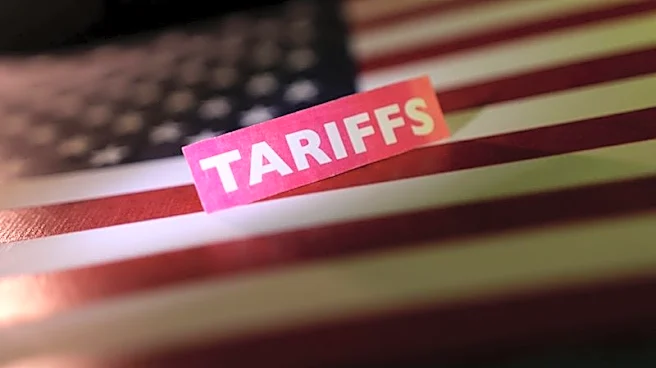









The Nullification Crisis of 1832-1833 represented a profound constitutional confrontation between the state of South Carolina and the federal government under President Andrew Jackson. At its heart was South Carolina's declaration that federal tariffs of 1828 and 1832 were unconstitutional and therefore unenforceable within its borders. This bold assertion of states' rights led to a tense standoff, with both sides preparing for potential military
conflict, ultimately resolved through a combination of presidential firmness, congressional compromise, and state-level strategic maneuvering.
South Carolina's Ordinance and Preparations for Resistance
In November 1832, the Nullification Convention in South Carolina formally declared the tariffs of 1828 and 1832 unconstitutional and unenforceable within the state after February 1, 1833. The convention warned that any attempt by the federal government to use force to collect these taxes would lead to South Carolina's secession from the Union. To underscore its resolve, Governor Robert Hayne, who succeeded James Hamilton Jr. in 1833, began military preparations.
Hayne established a 2,000-man group of mounted minutemen and organized 25,000 infantry troops, ready to march to Charleston if military conflict erupted. The state also purchased $100,000 worth of arms from the North to equip these forces. The enabling legislation passed by the South Carolina legislature was carefully crafted to create an aura of legality and, if possible, avoid direct clashes. It allowed importers to pay the tariff if they wished, while others could pay via paper tariff bonds. If customs officials seized goods after merchants refused to pay the bonds, merchants could file for a writ of replevin in state court to recover them. Customs officials who resisted would face civil liability for twice the goods' value. To ensure compliance, a "test oath" was required for all new state officials, binding them to support the nullification ordinance.
President Jackson's Firm Stance and the Force Bill
President Andrew Jackson responded decisively to South Carolina's actions. On January 16, 1833, he sent his Force Bill Message to Congress, outlining measures to ensure federal law was upheld. Jackson proposed closing custom houses in Beaufort and Georgetown, replacing them with ships at each port. In Charleston, the custom house would be moved to Castle Pinckney or Fort Moultrie in Charleston Harbor. He demanded direct payment of tariffs rather than bonds and sought to establish federal jails for violators whom the state refused to arrest. Furthermore, all cases arising under South Carolina's nullification act could be moved to the United States Circuit Court.
The most controversial aspect of Jackson's proposal was the revision of the militia acts of 1795 and 1807, which would permit the enforcement of customs laws by both the militia and the regular United States military. This "Force Bill" was sent to the Senate Judiciary Committee, chaired by William Wilkins and supported by Daniel Webster, which largely granted Jackson his requests. Despite attempts in South Carolina to shift the debate from nullification to the proposed enforcement, the bill signaled Jackson's unwavering commitment to federal authority.
Congressional Maneuvering: The Tariff Debate and Compromise
While the Force Bill progressed, efforts were also underway in Congress to address the tariff issue itself. The House Ways and Means Committee, led by Gulian C. Verplanck, drafted a compromise tariff proposing reductions back to 1816 levels over two years, while still maintaining the principle of protectionism. However, this Verplanck tariff faced opposition from various factions: anti-Jackson protectionists saw it as an economic disaster and a capitulation to South Carolina's threats, while Northern Democrats sought to protect their constituents' interests. Nullifier sympathizers, meanwhile, demanded a specific abandonment of protectionism, offering a longer transition period as a bargaining chip. It became clear that the Verplanck tariff would not pass.
Senator Henry Clay, a key figure in American politics, then stepped in. After consulting with manufacturers and sugar interests, Clay began working on a specific compromise plan. He accepted the nullifiers' offer of a transition period but extended it from seven and a half to nine years, aiming for a final 20% ad valorem rate. After securing support from his protectionist base, Clay negotiated with John C. Calhoun, who was receptive. Clay introduced his negotiated tariff bill on February 12, which was then refined by a select committee. The resulting Tariff of 1833 stipulated that the Tariff of 1832 would continue, but all rates above 20% would be reduced by one-tenth every two years, with final reductions to 20% by 1842. This compromise maintained protectionism as a principle but provided for gradual reductions.
Resolution and Aftermath
The Force Bill and the Compromise Tariff of 1833 became inextricably linked. On February 25, Clay delivered a speech condemning Jackson's proclamation as inflammatory but acknowledging the necessity of the Force Bill, while praising the Compromise Tariff as the solution to restore balance and avoid civil strife. The House passed the Compromise Tariff 119–85 and the Force Bill 149–48. In the Senate, the tariff passed 29–16, and the Force Bill passed 32–1, with many opponents walking out rather than voting.
Upon receiving news of the compromises, Calhoun rushed to Charleston. The Nullification Convention reconvened on March 11, repealing its November Nullification Ordinance. In a symbolic gesture, it also nullified the Force Bill. While nullifiers claimed victory on the tariff issue, despite making concessions, the broader verdict on nullification was less favorable. The federal majority had ultimately prevailed, which signaled potential difficulties for the South and its minority position, particularly concerning the institution of slavery. Robert Barnwell Rhett, a radical South Carolinian, articulated this concern, warning that the core issue was not just the tariff but the "despotism" of the federal government and the lack of security for the South's "peculiar policy" – slavery.