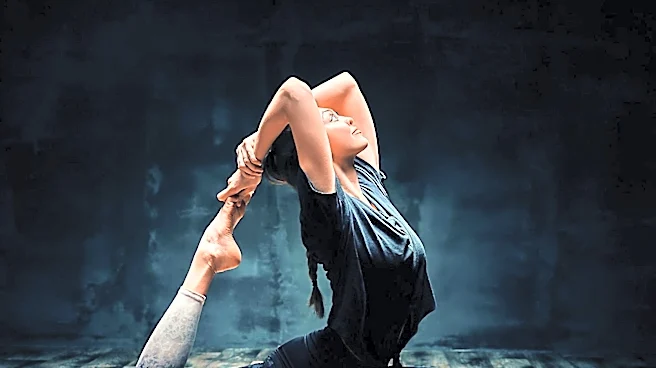



Eka Pada Rajakapotasana, commonly known as King Pigeon Pose, is a seated back-bending asana widely practiced in modern yoga. This pose is recognized for its ability to convey qualities such as flexibility and grace, often appearing in advertising to highlight these attributes. While the basic form of the pose was described in the 20th century by prominent yoga teachers Pattabhi Jois and B. K. S. Iyengar, pupils of Krishnamacharya, several variations
have since been developed to accommodate different levels of flexibility and practice.
Understanding the Basic King Pigeon Pose and its Origins
The fundamental Eka Pada Rajakapotasana is a seated back-bending posture. Its name, One-legged King Pigeon Pose, directly translates from Sanskrit, reflecting its form. The pose involves a significant backbend, requiring a degree of flexibility in the spine and hips. The development of this pose, as documented by Krishnamacharya's students, marks its integration into the structured practices of modern yoga as exercise. Its inclusion in various yoga styles underscores its importance in the physical discipline.Beyond its physical aspects, the pose's aesthetic appeal has made it a popular visual representation of yoga. The elegance and openness of the posture are often used to symbolize the broader benefits of yoga practice, such as physical prowess and mental tranquility. This visual association has contributed to its widespread recognition, even among those unfamiliar with the intricacies of yoga.
Variations of the Pigeon Pose Family
Within the family of pigeon poses, several distinct variations exist, each offering a different approach to the stretch and backbend. One such variation is Supported King Pigeon, or Salamba Kapotasana. In this version, the rear leg is extended straight out, and the hands remain on the ground beside the hips. This modification reduces the intensity of the backbend, making it more accessible. If comfortable, practitioners can arch their back further and direct their gaze upwards, deepening the stretch while maintaining support.Another notable variation is Sleeping Pigeon, also referred to as Sleeping Swan in Yin Yoga. This pose differs significantly from the advanced kneeling backbend of Kapotasana. In Sleeping Pigeon, the rear leg is kept straight, and the body and arms are stretched forward over the bent front leg. This variation focuses more on hip opening and a gentle forward fold rather than a deep backbend, providing a different set of benefits and sensations for the practitioner.
Modern Adaptations and Practice Aids
Modern yoga practices have also introduced innovative ways to perform and support the pigeon pose. Aerial yoga, for instance, features a variant called Flying Pigeon Pose. This version utilizes a hammock for support, with one foot hooked across the front of the hammock. The hammock provides assistance, allowing practitioners to explore the pose with reduced weight-bearing on the joints and potentially achieve deeper stretches or inversions.Furthermore, the pose can be adapted using props to aid in its execution. For example, the rear knee can be placed against a wall, and a strap can be used around the foot of the rear leg, with the lower leg held vertically. The strap is then grasped with both hands, with the arms reversed so that the elbows point upwards. This method helps in working towards the full expression of the pose by providing leverage and support, making it more approachable for individuals with varying levels of flexibility.