




The 2005 NASCAR Nextel Cup Series was a pivotal year for the sport, marked by significant rule adjustments and the introduction of new car models that aimed to reshape competition and fan engagement. These changes reflected NASCAR's ongoing efforts to evolve its racing series, from modifying the championship format to updating the vehicles on the track. The season, which ran from February to November, provided a testing ground for these innovations,
influencing both the competitive landscape and the commercial aspects of the sport.
The Impact of the Chase for the Nextel Cup
One of the most impactful changes introduced in 2005 was the continuation of the Chase for the Nextel Cup, a playoff system designed to intensify the championship battle. This format reset points for the top drivers before the final ten races, ensuring a tight competition for the title. Tony Stewart, for instance, entered the playoffs with a substantial 209-point lead over Greg Biffle, but this advantage was reduced to a mere 5 points due to the reset. This system aimed to prevent a driver from clinching the championship too early and to keep more contenders in the running until the season's conclusion.
The Chase system also created dramatic scenarios leading up to the playoffs. In 2005, ten racers were still mathematically contending for the final four spots in the Chase before the last qualifying race, with only one point separating Jamie McMurray in 10th from Ryan Newman in 11th. This close competition highlighted the high stakes of every race and the pressure on teams and drivers to perform consistently. The format successfully generated excitement and uncertainty, making the championship chase a central narrative of the season.
New Car Models and Manufacturer Fortunes
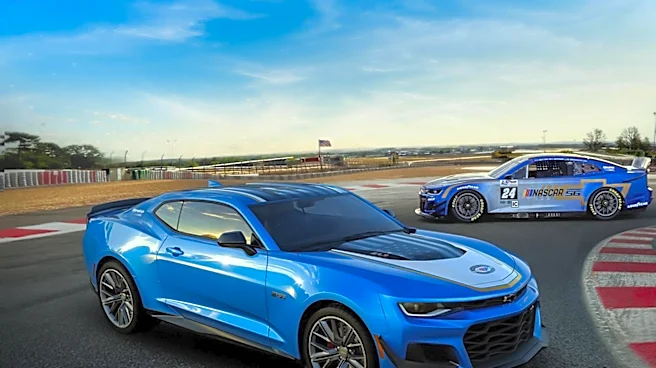
The 2005 season saw the introduction of new car models, most notably the Dodge Charger, which made its first appearance in competition since 1977. The Charger replaced the Dodge Intrepid, a model that Dodge had removed from its consumer lineup for the 2005 model year. Despite the change, the Charger's debut did not significantly alter Dodge's position as a distant third manufacturer in the NASCAR Nextel Cup, trailing behind Ford and Chevrolet. In 2004, the Intrepid had secured four wins out of 36 Cup races, while the Charger managed three wins in 2005. However, the Charger found greater success in the Busch Series, where it won 10 out of 32 races, indicating its potential in a different racing context.
Conversely, 2005 marked the final year for the Ford Taurus, which was scheduled to be replaced by the Ford Fusion in the 2006 season. These transitions in car models reflected the ongoing development and marketing strategies of manufacturers within NASCAR. While some new models struggled to immediately find success, others, like the Charger in the Busch Series, showed promise. The constant evolution of car designs and the competitive dynamics among manufacturers remained a crucial aspect of the sport.
Controversial Race Eliminations and Scheduling Shifts
Before the 2005 season commenced, NASCAR faced controversy over the elimination of two long-standing races: Darlington and North Carolina Speedway in Rockingham. The removal of the Rockingham race ended NASCAR's 38-year association with the track, a decision that sparked considerable discussion. These eliminated races were replaced by new events at Texas and Phoenix, reflecting a shift in NASCAR's scheduling priorities and geographical focus. This move aimed to introduce new venues and potentially reach different fan bases, but it also meant saying goodbye to traditional tracks.
In addition to venue changes, NASCAR also began moving start times later in the day during the 2005 season. This initiative aimed to allow races to finish in primetime, potentially increasing television viewership. By 2007, this change was fully implemented, with the Daytona 500, for example, concluding in primetime. These scheduling adjustments, alongside the introduction of new sponsorship rules allowing hard liquor brands to sponsor race cars, demonstrated NASCAR's proactive approach to modernizing its appeal and commercial viability.