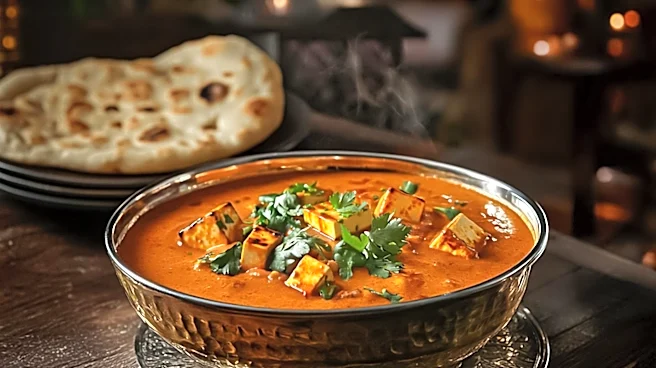




Butter chicken, known in India as murgh makhani, is a beloved curry recognized for its creamy, rich, and spiced tomato and butter-based gravy. This iconic dish, now a staple in many countries with a South Asian diaspora, has a fascinating origin story rooted in the ingenuity of two Indian chefs, Kundan Lal Gujral and Kundan Lal Jaggi. Their culinary innovation, born from necessity and chance, transformed leftover tandoori chicken into a global phenomenon,
forever linking their names and their Moti Mahal restaurant to this flavorful creation.
The dish's journey began in the mid-20th century, though its exact birthplace is a subject of some debate. While widely associated with the Moti Mahal restaurant in Daryaganj, Delhi, which popularized it in the 1950s, some accounts suggest an earlier origin. Regardless of the precise location, the core narrative involves the resourceful use of ingredients and a stroke of culinary luck that led to the birth of butter chicken.
The Genesis of a Classic: Leftovers and Innovation
The creation of butter chicken is often described as an accidental discovery. The story goes that chefs Kundan Lal Jaggi and Kundan Lal Gujral developed the curry by mixing leftover tandoori chicken into a tomato sauce that was rich in butter, or "makhan/makhani." This resourceful approach not only prevented waste but also resulted in a dish with a unique and appealing flavor profile. The addition of butter to the tomato sauce created the signature creamy texture and mild richness that defines butter chicken.
Both chefs were Punjabi Hindu refugees who had migrated to Delhi from Peshawar following the partition of India. They established the Moti Mahal restaurant in the Daryaganj neighborhood of Old Delhi, where they began to popularize this new dish in the 1950s. The restaurant quickly became synonymous with butter chicken, and it is often credited as the place where the dish was invented. This period marked a significant turning point for the curry, as it began its ascent to culinary fame within Delhi and beyond.
Debates on Origin: Peshawar or Delhi?
While Moti Mahal in Delhi is widely recognized as the birthplace of butter chicken, a more recent claim by Monish Gujral, a grandson of Kundan Lal Gujral and managing director at Moti Mahal, suggests an earlier origin. In 2024, Monish Gujral stated that the dish was actually created in Peshawar at another one of their restaurants prior to the partition, possibly in the 1920s or 1930s. This statement emerged during a legal dispute with the Jaggi family, who now operate the "Daryaganj" restaurant and attribute the invention to Kundan Lal Jaggi at Moti Mahal in Delhi.
Interestingly, Monish Gujral's own 2013 book, "On the Butter Chicken Trail: A Delhi Darbar Cookbook," had previously credited the accidental discovery of the dish to Moti Mahal in the 1950s. This discrepancy highlights the complexities and sometimes contested narratives surrounding the origins of popular dishes. Some food writers also support the Peshawar origin claim, noting that certain ingredients in butter chicken appear to cater to non-Indian tastes and that butter was produced at scale in British garrison cities like Peshawar, potentially making it a more accessible ingredient there at an earlier time.
Global Reach and Enduring Legacy
Regardless of the precise location of its initial creation, butter chicken and the Moti Mahal restaurant have become closely associated with Delhi cuisine. The restaurant is also credited with inventing other "makhani" (butter) based curries, such as dal makhani and paneer makhani, further cementing its legacy in Indian culinary history. The dish's popularity quickly spread, and by 1975, the English phrase "butter chicken" curry appeared in print as a specialty at the Gaylord Indian restaurant in Manhattan, indicating its growing recognition in the Western world.
Today, butter chicken is common in India, Bangladesh, Pakistan, and many other countries with a South Asian diaspora. Its adaptability has led to its inclusion in various forms in different regions; for example, in Canada and the Caribbean, it can be found as a filling in pizza, poutine, wraps, roti, or rolls, while in Australia and New Zealand, it is even used as a pie filling. Its widespread appeal has sometimes led to the mistaken assumption of a Western origin, a confusion it shares with similar dishes like chicken tikka masala, underscoring its global integration and timeless appeal.