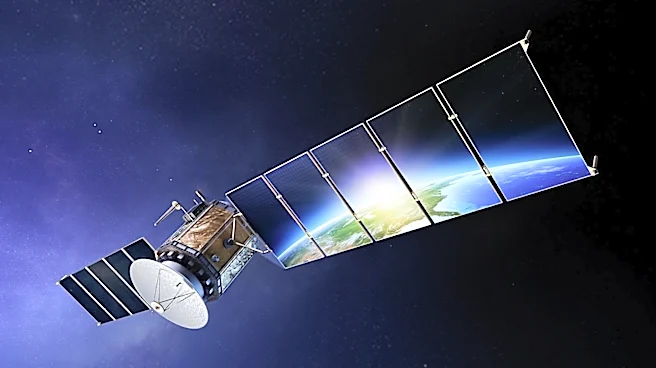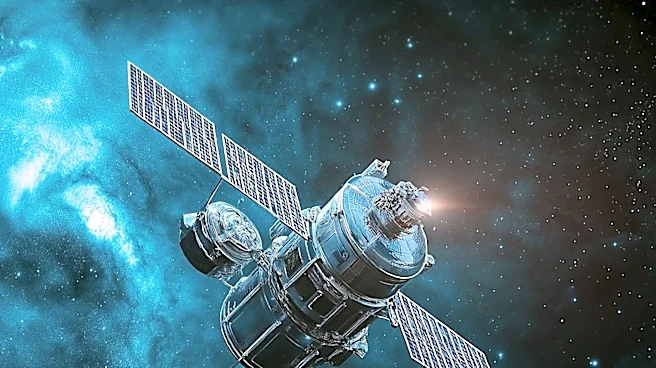





Explorer 4 was a significant satellite in the history of space exploration, launched by the United States on July 26, 1958. This satellite was part of NASA's Explorer program and was designed to study the Earth's radiation belts. The mission was crucial for understanding the effects of nuclear explosions on these belts and the Earth's magnetosphere. Despite some challenges, Explorer 4 provided valuable data that contributed to the scientific community's
understanding of space.
Launch Details
Explorer 4 was launched from the Cape Canaveral Missile Test Center using a Juno I rocket. This launch vehicle was a variant of the three-stage Jupiter-C with an added fourth propulsive stage. The first stage was an upgraded Redstone liquid-fueled rocket, while the second and third stages comprised clusters of Sergeant solid-fuel rocket motors. The launch was successful, and the satellite was injected into an initial orbit with a perigee of 263 km and an apogee of 2,213 km. The orbit had an inclination of 50.30°, allowing the satellite to sample a wide area at higher altitudes.
The launch was not without its challenges. Soon after orbit insertion, Explorer 4 developed an end-over-end tumbling motion with a period of about six seconds. This tumbling affected the measurements and signal levels throughout the mission, making data interpretation more complex. Despite these difficulties, the satellite remained operational and provided valuable data for several months.
Mission Objectives
The primary objective of Explorer 4 was to extend the first measurements of the trapped radiation belt discovered with Explorer 1 and Explorer 3. The satellite was equipped with four separate radiation detectors to achieve this goal. These detectors were designed to measure charged particles, such as protons and electrons, trapped in the Earth's radiation belts. The data collected by these instruments were crucial for understanding the behavior of these particles and their impact on the Earth's magnetosphere.
In addition to studying the natural radiation belts, Explorer 4 was tasked with observing the effects of artificially injected electrons from high-altitude nuclear detonations. The satellite's telemetry was analyzed for three Operation Argus nuclear weapons tests conducted between August 27 and September 6, 1958. These tests provided insights into the effects of nuclear explosions on the space environment.
Challenges and Achievements
The mission faced several challenges, including the unexpected tumbling motion of the satellite, which complicated data interpretation. Additionally, the low-power transmitter and one of the radiation detectors failed on September 3, 1958. Despite these setbacks, the remaining instruments continued to operate normally until October 5, 1958, when the high-power transmitter ceased sending signals.
Explorer 4's mission was considered a success, as it provided valuable data on the Earth's radiation belts and the effects of nuclear explosions in space. The satellite remained in orbit for 454 days before decaying on October 23, 1959. The information gathered by Explorer 4 contributed significantly to the scientific understanding of space and laid the groundwork for future missions.