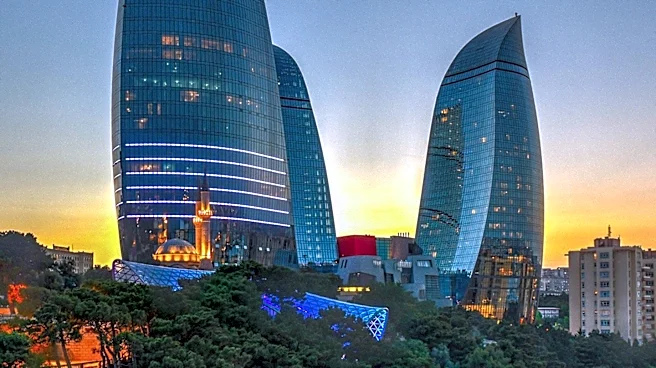




Baku, the vibrant capital of Azerbaijan, boasts a rich and complex history stretching back to the Stone Age. Its strategic location on the Caspian Sea and the Absheron Peninsula has made it a focal point for various civilizations, empires, and cultural exchanges. From ancient settlements and Roman incursions to its time as a Shirvanshah realm and a crucial Soviet city, Baku's past is a tapestry woven with diverse influences and significant transformations.
Traces of Antiquity and Early Civilizations
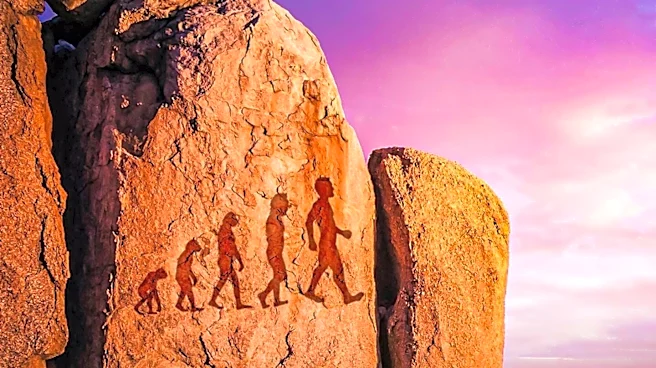
Evidence of human settlement in the Baku region dates back to the Stone Age. Archeological discoveries, such as Bronze Age rock carvings near Bayil and a bronze figure of a small fish in the Old City, suggest the presence of a Bronze-Age settlement within the city's territory. Near Nardaran, a prehistoric observatory called Umid Gaya features carvings of the sun, constellations, and a primitive astronomic table, indicating early human observation of the cosmos.Further excavations have unearthed various prehistoric settlements, native temples, statues, and other artifacts both within and around the modern city. In the 1st century AD, the Romans conducted two Caucasian campaigns, reaching what is now Baku. Roman inscriptions dating from AD 84 to 96, found in Gobustan near the city, provide some of the earliest written evidence of a city in the area. Historical accounts also suggest that St. Bartholomew the Apostle preached Christianity in the region in 71 AD, converting members of the local royal family before his martyrdom.
The Shirvanshahs and Medieval Fortifications
During the 8th century AD, Baku was part of the Shirvanshah realm. This period was marked by frequent assaults from the Khazars and, starting from the 10th century, from the Rus'. Akhsitan I, a Shirvanshah ruler, famously built a navy in Baku and successfully repelled a Rus' assault in 1170. A significant turning point occurred in 1191 when, following a devastating earthquake in Shamakhi, the Shirvanshah's capital, the court relocated to Baku.This era saw the construction and strengthening of numerous defensive structures that still stand today. Castles like the Ramana Tower, the Nardaran Fortress, the Shagan Castle, the Mardakan Quadrangular Castle, and the Mardakan Round Castle date from this period. The Sabayil Castle, located on an island in the Bay of Baku, also originates from this time. Crucially, the city walls of Baku, encompassing what is now known as the Old City, were rebuilt and reinforced during the Shirvanshah rule, solidifying Baku's defensive capabilities.
The Soviet Era: A City Transformed
The early 20th century brought significant changes to Baku. After a brief period of independence for the Azerbaijani republic, the 11th Red Army invaded Baku on April 28, 1920, reinstating the Bolsheviks. Baku then became the capital of the Azerbaijan Soviet Socialist Republic within Soviet Russia. This marked the beginning of a period of profound transformation for the city.Under Soviet rule, Baku played a crucial role in many aspects of Soviet life. It emerged as the major oil city of the Soviet Union, a status that significantly boosted its economic and strategic importance. From approximately 1921, the city was governed by the Baku City Executive Committee, known as Bakgorispolkom, which, along with the Baku Party Committee (Baksovet), was instrumental in developing the Caspian metropolis's economic significance. Between 1922 and 1930, Baku also served as a major venue for one of the Soviet Union's key trade fairs, acting as a commercial gateway to Iran and the Middle East.