







The human hand is a marvel of intricate anatomy, allowing for a vast range of movements from powerful grips to delicate manipulations. Among the many muscles contributing to this dexterity is the flexor digiti minimi brevis, a specialized muscle located in the hand. This muscle plays a crucial role in the movement of the little finger, specifically its ability to bend or flex. Understanding its structure, origin, insertion, and innervation provides
insight into the complex mechanics of the hand and how we perform everyday tasks involving our smallest digit.
Anatomical Location and Function
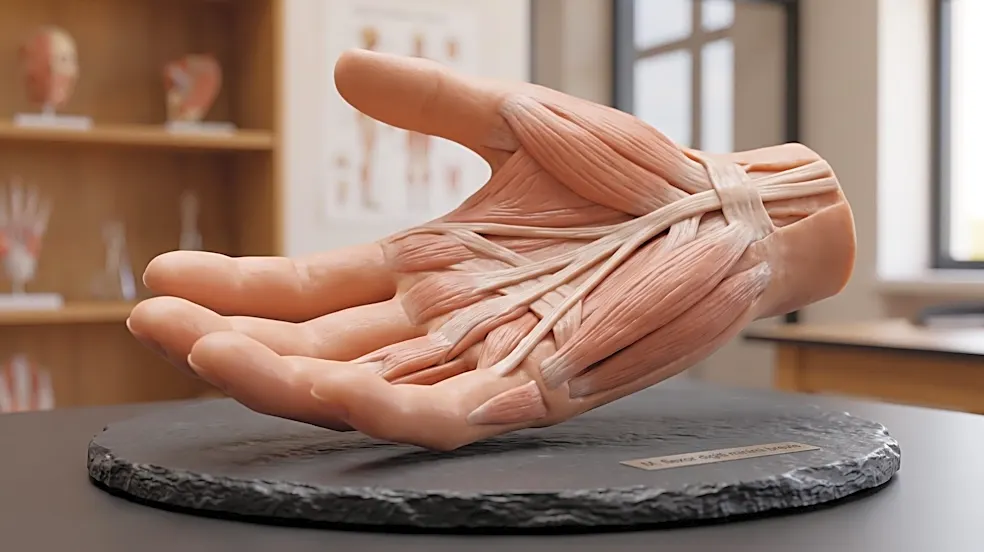
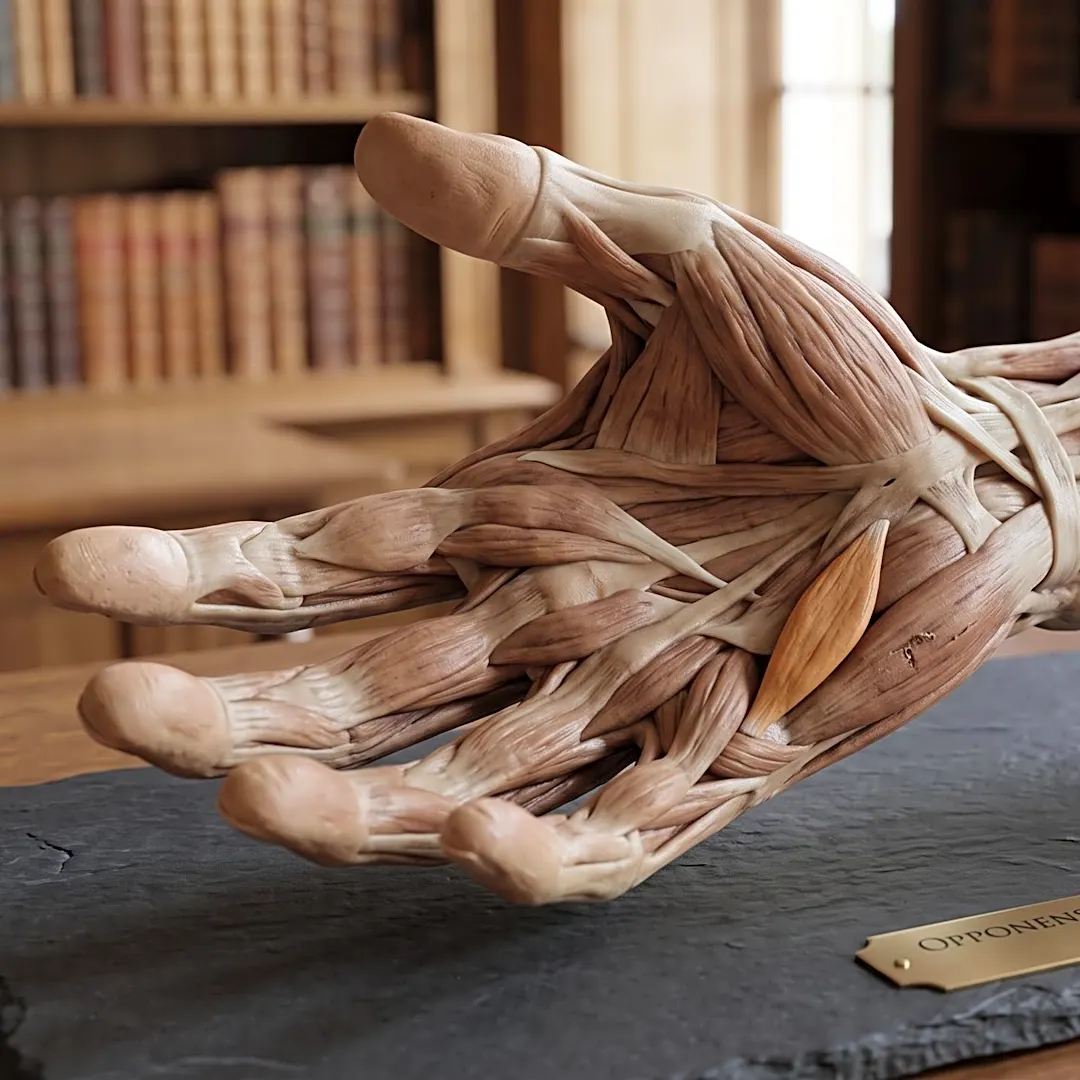
The flexor digiti minimi brevis is classified as a hypothenar muscle. The hypothenar muscle group forms the fleshy prominence at the base of the little finger, and all three muscles within this group are exclusively dedicated to the movement of the fifth digit. The primary function of the flexor digiti minimi brevis is to flex the little finger at the metacarpophalangeal joint. This action is essential for various hand movements, including grasping and cupping the hand.
In anatomical position, the flexor digiti minimi brevis lies lateral to another hypothenar muscle, the abductor digiti minimi. This precise positioning within the hand allows for coordinated movement and specialized functions. The muscle's action is directly opposed by the extensor digiti minimi muscle, which works to extend the little finger, creating a balanced system for finger control.
Origin, Insertion, and Innervation
To understand how the flexor digiti minimi brevis performs its function, it's important to examine its points of attachment and its nerve supply. The muscle originates from two distinct points: the hook of the hamate bone and the palmar surface of the flexor retinaculum of the hand. The hamate bone is one of the carpal bones in the wrist, while the flexor retinaculum is a strong band of connective tissue that forms the roof of the carpal tunnel.
From these origins, the muscle fibers extend to insert into the medial side of the base of the proximal phalanx of the fifth digit. The proximal phalanx is the first bone of the little finger, closest to the palm. This attachment point allows the muscle to exert leverage and flex the finger effectively. The flexor digiti minimi brevis receives its nerve supply from the deep branch of the ulnar nerve, which is crucial for transmitting the signals from the brain that initiate muscle contraction.
Part of the Hypothenar Group
The flexor digiti minimi brevis is not an isolated muscle; it is one of three muscles that constitute the hypothenar muscle group. The other two muscles in this group are the abductor digiti minimi and the opponens digiti minimi. Together, these three muscles create the characteristic fleshy mass at the base of the little finger and are solely responsible for its movements. In anatomical position, when viewed from medial to lateral, the arrangement of these muscles is the abductor digiti minimi, followed by the flexor digiti minimi brevis, and then the opponens digiti minimi.
Interestingly, the flexor digiti minimi brevis is sometimes absent in individuals. In such cases, the abductor digiti minimi is typically larger than usual, suggesting a compensatory mechanism where the remaining hypothenar muscles adapt to perform the necessary functions for the little finger. The deep branches of the ulnar artery and the ulnar nerve separate the flexor digiti minimi brevis from the abductor digiti minimi at their origins, highlighting the intricate vascular and nervous supply to this vital region of the hand.