



Balochi needlework, known as Balòči gòd dòči, is a distinctive handicraft created by the Baloch people, an ethnic group native to the Balochistan region of South and West Asia. This region spans parts of Pakistan, Iran, and Afghanistan. Recognized by the United Nations Educational, Scientific and Cultural Organization (UNESCO) as a heritage art, Balochi needlework holds significant cultural value and is sold internationally. It represents a rich tradition
passed down through generations, embodying the artistic expression and cultural identity of the Baloch people.
Origins and Traditional Practices
The exact history of Balochi needlework remains somewhat unknown, with several theories attempting to trace its origins. One theory suggests that it may have originated from Mehrgarh, a Neolithic site located in modern-day Pakistan, indicating a very ancient lineage for the craft. Another theory proposes that it was brought to Balochistan through the migration of the Slavs approximately 200 years before the spread of Islam, noting similarities to their traditional embroidery called Rushnyk. A third theory links the development of this craft to the silk production industry, suggesting an evolution alongside textile trade and manufacturing.
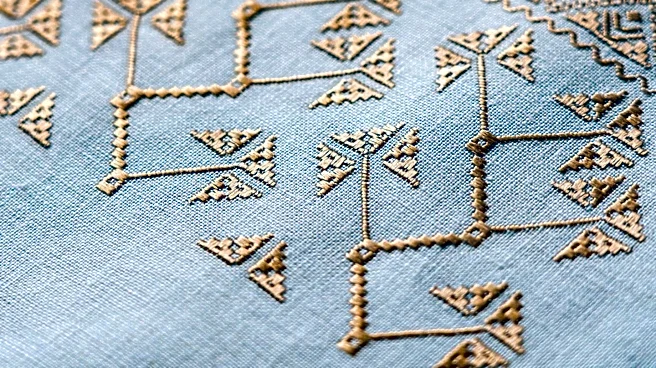
Traditionally, Balochi needlework has been exclusively created by women, with skills and patterns meticulously passed down from one generation to the next. This intergenerational transfer of knowledge ensures the continuity of the art form and reinforces its role in cultural heritage. Different Baloch tribes possess their own distinct needlework designs, reflecting the diversity within the Baloch community and the unique artistic expressions of each tribal group. These designs are not merely decorative; the stitching patterns and motifs often carry symbolic meanings, with common elements including arrows, "chicken feet," diamonds, and flowers.
Materials, Motifs, and Applications
Balochi needlework is characterized by its intricate designs and the incorporation of various materials. Beyond the primary threads, some designs integrate small pieces of mirror, known as shisha, which add a shimmering, reflective quality to the fabric. Different colors of thread are used to create vibrant and complex patterns, and sometimes pieces of colored fabric are also incorporated, adding texture and depth to the overall design. These elements combine to create visually striking and culturally rich textiles.
Historically, the needlework was primarily used to decorate women's clothing, transforming everyday garments into elaborate works of art. This practice not only enhanced the aesthetic appeal of clothing but also served as a form of personal and cultural expression. Over time, the application of Balochi needlework expanded beyond attire. It is now also used to adorn household items such as pillows, curtains, and tablecloths, bringing the distinctive artistry of the Baloch people into various aspects of daily life. Additionally, it has found its way onto men's clothing, further broadening its reach and demonstrating its versatility. In 2015, the majority of sales for Balochi needlepoint clothing were concentrated in Pakistan and Afghanistan, highlighting its continued significance in the region.