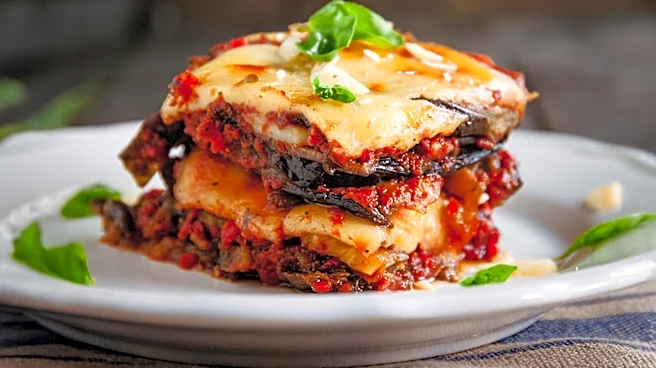

Parmigiana, a beloved Italian dish, is known for its layers of fried eggplant, tomato sauce, and cheese, baked to perfection. While it is a staple in Italian cuisine, its origins are a subject of debate
among various regions in Italy. This article delves into the historical development of Parmigiana, examining the claims of different regions and how the dish has evolved over time.
Regional Claims to Parmigiana
The origins of Parmigiana are claimed by several Italian regions, including Sicily, Campania, and Emilia-Romagna. Each region presents its own narrative and reasoning for being the birthplace of this iconic dish. In Emilia-Romagna, the connection is often made through the name itself, as Parmigiana is thought to refer to Parma, a city in the region, and the Parmesan cheese produced there. This association with Parmesan cheese strengthens the claim of Emilia-Romagna as the origin.
Sicilian food writers, on the other hand, offer different explanations for the dish's Sicilian roots. One theory suggests that the name Parmigiana derives from the Sicilian word for 'louver,' which resembles the layered structure of the dish. Another theory links the name to a Sicilian term for a wicker sleeve used in cooking, further embedding the dish in Sicilian culinary tradition.
Historical Development
The historical development of Parmigiana can be traced back to Naples, where early versions of the dish appeared in cookbooks. Vincenzo Corrado's 1786 cookbook, "Il cuoco galante," includes a recipe for eggplant seasoned with butter, herbs, and Parmesan cheese, covered with a cream sauce before baking. This early version laid the groundwork for the modern Parmigiana.
By 1837, Ippolito Cavalcanti's cookbook "Cucina teorico-pratica" introduced a version of the dish that included Parmesan and tomato ragù, reflecting the growing popularity of tomatoes in Italian cuisine. This evolution in Naples suggests that the dish as we know it today developed during this period, influenced by the culinary trends of the time.
The Modern Parmigiana
Today, Parmigiana is enjoyed worldwide, with variations that include chicken and veal, particularly in the United States and Canada. These adaptations reflect the dish's versatility and its ability to transcend its original eggplant base. In the U.S., the use of meats in Parmigiana dishes was influenced by similar Italian recipes, leading to the creation of chicken and veal Parmigiana.
Despite its variations, the essence of Parmigiana remains rooted in its Italian heritage. The dish continues to be a symbol of Italian culinary tradition, celebrated for its rich flavors and comforting layers. Whether enjoyed in its classic form or through its modern adaptations, Parmigiana remains a testament to the enduring appeal of Italian cuisine.