


BMW Motorsport, now known as BMW M Motorsport, represents the division of BMW dedicated to its extensive motorsport activities. This division has a rich history spanning various racing disciplines, including motorcycle racing, touring car racing, sports car racing, Formula One, and Formula Two. The organization underwent a significant restructure in April 2021, merging the BMW M high-performance division with the competitive motorsport division to streamline
its efforts. This long-standing commitment to racing has not only built BMW's reputation but also driven technological advancements that have influenced its production vehicles.
Early Racing Success and Post-War Revival
BMW began building its own cars in the 1930s, and it was the Model 328 that significantly boosted the company's sporting reputation. This model achieved notable performances, including strong showings at the 1939 24 Hours of Le Mans and a victory at the Mille Miglia in 1940. Following World War II, the 328 models served as the foundation for a series of racing cars collectively known as BMW Eigenbau. These vehicles found success in Formula Two during the late 1940s and early 1950s, competing until 1955. They also participated in Formula One races, showcasing BMW's early engineering prowess in single-seater competition.
After the introduction of a "new" Formula Two, BMW temporarily withdrew from the series to focus on touring car racing. However, the company made a return to Formula Two in 1967, utilizing 1.6-liter engines designed by Apfelbeck. Drivers such as Jo Siffert and Hubert Hahne piloted these cars. In 1967, BMW used Lola T100 chassis, followed by Lola T102s in 1968. A significant moment occurred in June 1969 with the introduction of the Lena Terry-designed 269 car, though it was tragically involved in an accident that claimed the life of driver Gerhard Mitter during the 1969 German Grand Prix. Despite this, BMW continued its Formula Two efforts, with Siffert, Hahne, Quester, and Ickx achieving victories in the 270 model in 1970. Quester finished fourth in the championship that year and secured a win in Macau.
Formula One Ambitions and Touring Car Dominance
In 1971, BMW scaled back its direct involvement in Formula Two, primarily supplying engines to Quester, who was competing with an Eifelland March. By 1973, the company made a full return, providing engines to the factory March team with drivers Jean-Pierre Beltoise and Jean-Pierre Jarier. Jarier went on to win the title, and BMW continued its successful participation in Formula Two until the series was dissolved in 1984. During this period, in 1979, BMW also launched the Procar series, which ran until 1980.
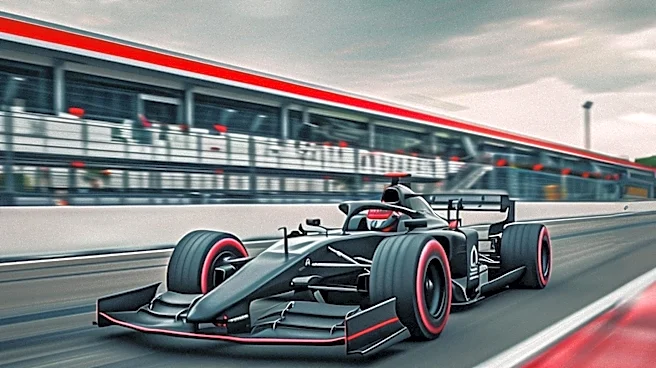
BMW's aspirations extended to Formula One. Initially, BMW boss Jochen Neerpasch attempted to convince the company's board to enter Formula One but was unsuccessful, leading to his departure. However, his successor, Dieter Stappert, managed to persuade the board, and BMW decided to supply turbocharged engines to the Brabham team. These engines were tested from late 1980 and debuted in Formula One in the 1982 season. They achieved nine victories and powered Nelson Piquet to the Drivers' World Championship title in 1983. By the end of 1986, BMW announced its withdrawal from Formula One, and the rights to the M12/13 engine were acquired by Megatron.
Following its Formula One exit, BMW Motorsport shifted its focus back to touring car racing. In the mid-1990s, the company supplied engines for McLaren's GT program. BMW re-entered Formula One in 1997, announcing a partnership with Williams. From the 2000 season, Williams received BMW engines, which were considered the most powerful Formula One engines of that era. The Williams team came close to winning the title in 2003. However, relations between BMW and Williams became strained, leading BMW to purchase the Sauber team in mid-2005, forming the factory team BMW Sauber. This team competed in Formula One from 2006, securing its only victory in 2008 with Robert Kubica. BMW sold its shares back to Sauber at the end of 2009, though the team retained "BMW" in its name for the 2010 season. Today, BMW remains active in various series, including DTM, USCC, and World Superbike, continuing its rich motorsport heritage.