






Louis Armstrong and His Hot Five stands as a monumental entity in the annals of jazz, not just for its groundbreaking music but also for its unique operational model. Primarily a recording studio band, the Hot Five rarely performed live, yet its influence permeated the jazz world, fundamentally altering its direction. Organized at the behest of Richard M. Jones for Okeh Records, this group, led by the incomparable Louis Armstrong, became the vehicle
through which jazz transitioned from a collective improvisational art form to one that celebrated the individual soloist. The recordings made in Okeh's Chicago studio between 1925 and 1927 captured Armstrong's innovative spirit, establishing him as the founding and most influential exponent of jazz improvisation and setting new standards for musicians for generations to come.
The Studio as a Stage: Crafting a Legacy
The Hot Five was distinct in its primary function: it was a recording studio band. Unlike many contemporary jazz ensembles that built their reputations through live performances in clubs and dance halls, the Hot Five's legacy was forged almost entirely within the confines of Okeh's recording studio in Chicago, Illinois. This focus on recording allowed for a concentrated effort on musical innovation and the meticulous crafting of their sound. The group's first session took place on November 15, 1925, following rehearsals at Louis Armstrong and Lil Hardin Armstrong's residence. The personnel for this seminal group included Armstrong on trumpet, Lil Hardin Armstrong on piano, Kid Ory on trombone, Johnny Dodds on clarinet, and Johnny St. Cyr on banjo.
Despite their limited live appearances—only two parties organized by Okeh—the Hot Five's recordings became immensely popular and influential. These sessions were crucial in documenting the evolution of jazz, particularly Armstrong's revolutionary trumpet playing. The fact that they were primarily a studio entity meant that their recorded output was their main form of communication with the wider musical world, allowing their innovations to be disseminated and studied by musicians and enthusiasts alike.
Redefining Jazz: From Collective to Solo Brilliance
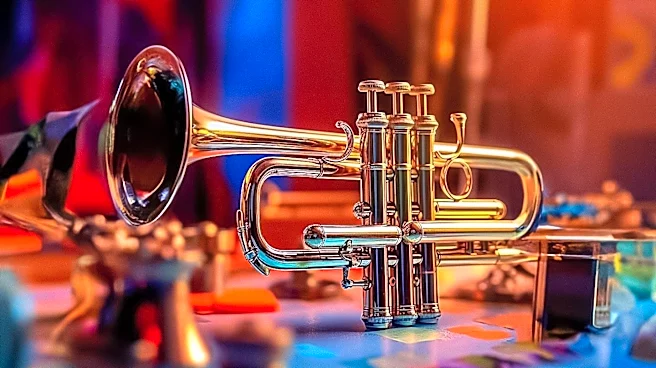
The traditional New Orleans jazz style, which the Hot Five initially embodied in its instrumentation, leaned heavily on collective improvisation. In this style, the three horn players—trumpet, clarinet, and trombone—would collectively play the lead, with the trumpet carrying the main melody and the other horns providing improvised accompaniments. However, with Louis Armstrong at the helm, this dynamic began to shift dramatically. His extraordinary creative gifts as a trumpet player led to the increasing prominence of solo passages.
These solos were not just moments of individual expression; they were foundational. Armstrong, through his work with the Hot Five, laid down the basic vocabulary of jazz improvisation. He became its most influential exponent, demonstrating how a single instrument could carry the narrative and emotional weight of a piece. The recordings from 1925 to 1926 are particularly celebrated for these influential solos and for Armstrong's role in establishing techniques like stop-time. This emphasis on the soloist radically altered jazz's focus, moving it away from purely collective playing towards a celebration of individual instrumental and vocal improvisations, a change that redefined the music itself.