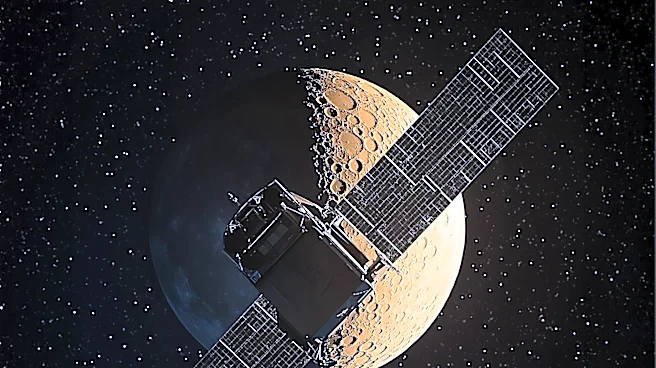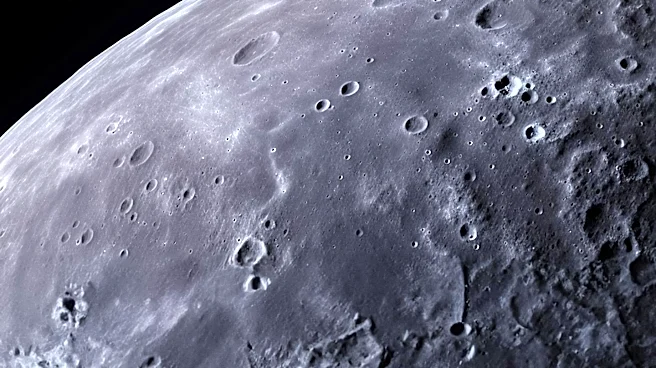






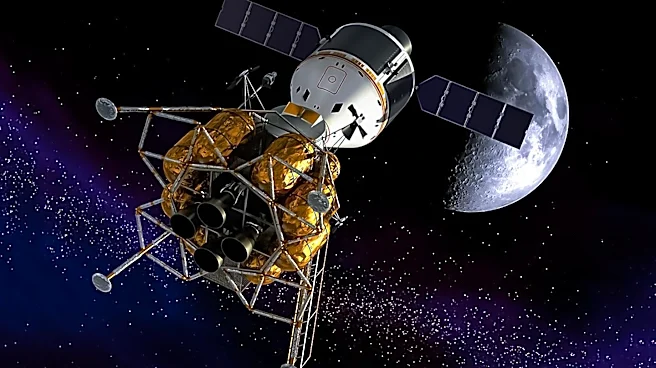
Lunar Orbiter 5 played a pivotal role in the comprehensive mapping of the Moon's surface, a task crucial for the success of future lunar missions. Launched in 1967, this spacecraft was the last in the Lunar Orbiter series, designed to capture high-resolution images of the Moon, particularly focusing on areas that had not been previously photographed. Its mission was instrumental in providing detailed maps that would guide the Apollo and Surveyor missions in selecting
safe landing sites.
Photographic Achievements
The primary objective of Lunar Orbiter 5 was to photograph the Moon's surface with unprecedented detail. The spacecraft was equipped with advanced imaging technology capable of capturing high-resolution images down to a resolution of 2 meters. During its mission, Lunar Orbiter 5 acquired a total of 633 high-resolution and 211 medium-resolution frames. These images covered both the near and far sides of the Moon, providing a comprehensive view of its surface.
The mission's photographic achievements were significant, bringing the cumulative coverage of the Moon's surface by the Lunar Orbiter series to 99%. This extensive mapping was crucial for identifying potential landing sites for the Apollo missions, ensuring that astronauts would have safe and suitable locations to land and conduct their explorations.
Technical Details and Mission Execution
Lunar Orbiter 5 was launched into a cislunar trajectory and entered an elliptical near-polar lunar orbit on August 5, 1967. The spacecraft's orbit was carefully adjusted to optimize its imaging capabilities. Initially, it orbited the Moon at altitudes ranging from 194.5 to 6,023 kilometers, with an inclination of 85 degrees. Subsequent adjustments lowered the perilune to 100 kilometers and then to a 99-by-1,499-kilometer orbit.
The spacecraft's mission spanned from August 6 to 18, 1967, with data readout continuing until August 27. Throughout this period, Lunar Orbiter 5 successfully captured and transmitted high-resolution images back to Earth, providing valuable data for lunar exploration.
Legacy and Impact
The data and images collected by Lunar Orbiter 5 were instrumental in shaping the future of lunar exploration. By providing detailed maps of the Moon's surface, the mission helped ensure the success of the Apollo and Surveyor missions. The comprehensive coverage achieved by Lunar Orbiter 5 and its predecessors laid the groundwork for future lunar exploration, enabling scientists and engineers to plan and execute missions with greater precision and confidence.
As the final mission in the Lunar Orbiter series, Lunar Orbiter 5 left a lasting legacy in the field of space exploration. Its contributions to mapping the Moon's surface were invaluable, paving the way for the successful Apollo landings and expanding our understanding of Earth's closest celestial neighbor.