




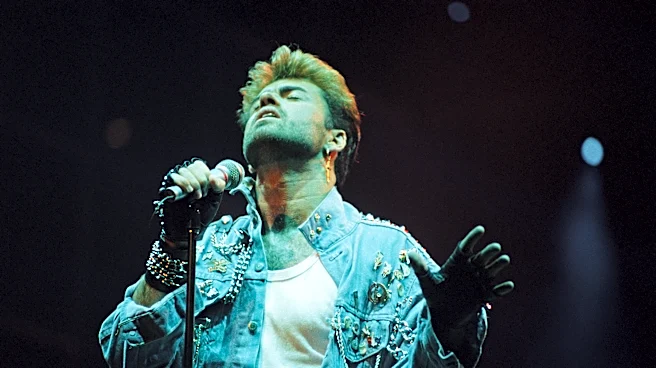


George Michael's debut solo album, "Faith," released after his departure from Wham!, was a bold statement of artistic independence and musical versatility. The album, which took over a year to create, showcased Michael's ambition to transcend the pop landscape and establish himself as a serious, multifaceted artist. "Faith" is characterized by its blend of various musical styles, from soul and rock to funk and jazz, all unified by Michael's distinctive
vocals and introspective songwriting. This genre-bending approach, coupled with his hands-on involvement in writing and producing nearly every track, solidified "Faith" as a landmark album that redefined his public image and musical direction.
A Spectrum of Musical Influences
"Faith" is a rich tapestry of musical genres, demonstrating George Michael's broad artistic palette. The album features soulful tracks like "Father Figure" and "One More Try," which evoke the tradition of artists such as Marvin Gaye and Stevie Wonder. "One More Try," for instance, is a soul song that delves into the emotional complexities of a man pushing away a lover due to past fears, only to eventually accept the invitation. In contrast, the album also embraces rock elements in songs like the title track "Faith," "Look at Your Hands," and "Hand to Mouth." The title track itself famously begins with an organ fanfare reminiscent of Wham!'s "Freedom" played in a cathedral setting, before transitioning into a rockabilly sound akin to Bo Diddley, infused with Michael's unique vocal style.
Funk influences are prominently displayed in tracks such as "Monkey" and "Hard Day." "Hard Day," much like the initial parts of "I Want Your Sex," draws heavily from funk, creating a vibrant and rhythmic sound. "Monkey" also returns to these funk roots, with a remix by Jimmy Jam and Terry Lewis later introducing a new jack swing approach to the original. Adding another layer to the album's diversity, "Kissing a Fool" stands out as a jazz-influenced ballad, its lyrics solemnly describing the pain of a breakup. This eclectic mix of styles not only kept listeners engaged but also highlighted Michael's ability to master different musical idioms.
Lyrical Depth and Controversial Themes
Beyond its musical diversity, "Faith" is notable for its introspective lyrics, which often generated discussion about George Michael's personal relationships at the time. Some of the material on the album was more explicit and graphic than his previous work with Wham! A prime example is "I Want Your Sex," a multi-part song that explores themes of desire and intimacy. The first part, "Rhythm 1: Lust," was the electro-funk influenced version released as a single. "Rhythm 2: Brass in Love" blended instrumental funk with a smoother R&B arrangement, while "Rhythm 3: A Last Request," the album's closing track, featured a jazz-influenced quiet storm and R&B sound, with lyrics depicting Michael's drunken attempts to entice his lover to bed. These tracks pushed boundaries and showcased a more mature, candid side of Michael's songwriting.
The album also included social commentary. "Hand to Mouth" adopted a pop and folk approach to address societal issues, while "Look at Your Hands," co-written with David Austin, presented a pop song with rock elements, featuring piano and saxophone, to deliver similar social observations. Michael's liner notes in the album booklet underscored the personal nature of the project, stating, "These songs are the result of the last two years of my life. They are dedicated to my family and friends, whose loyalty and time are more important to me than ever before. Love as always, George." This dedication emphasized the deeply personal journey embedded within the album's diverse soundscape.
The Technology Behind the Sound
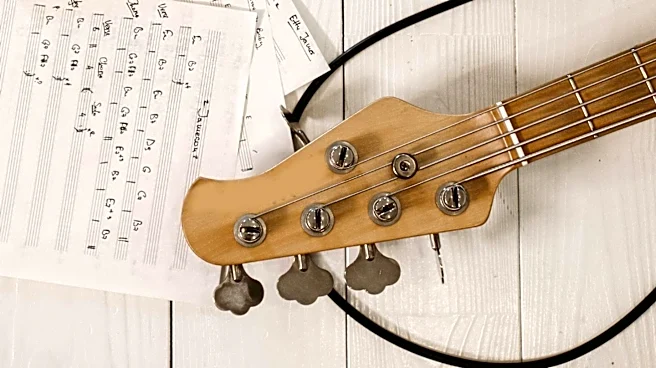
George Michael's meticulous approach to "Faith" extended to the instrumentation and technology used in its creation. He employed a range of synthesizers, including the Yamaha DX7, Roland S-50, Roland D-50, and Roland Juno-106, with the latter often used for most of the synthesized bass parts and strings. For drum sounds, Michael relied on several drum machines: a LinnDrum, which was his primary choice, a Roland TR-808, and a Yamaha RX-5. Drum parts were also played on a Pearl drum kit for tracks like "Look at Your Hands" and a Roland Octapad. Engineer Chris Porter's Greengate DS3 sampler was occasionally used in conjunction with the LinnDrum for specific drum sounds, though Michael generally preferred the Linn's inherent sounds. For non-synthesized bass parts, Michael played a Fender Precision Bass, further illustrating his hands-on involvement in crafting the album's distinct and enduring sound.