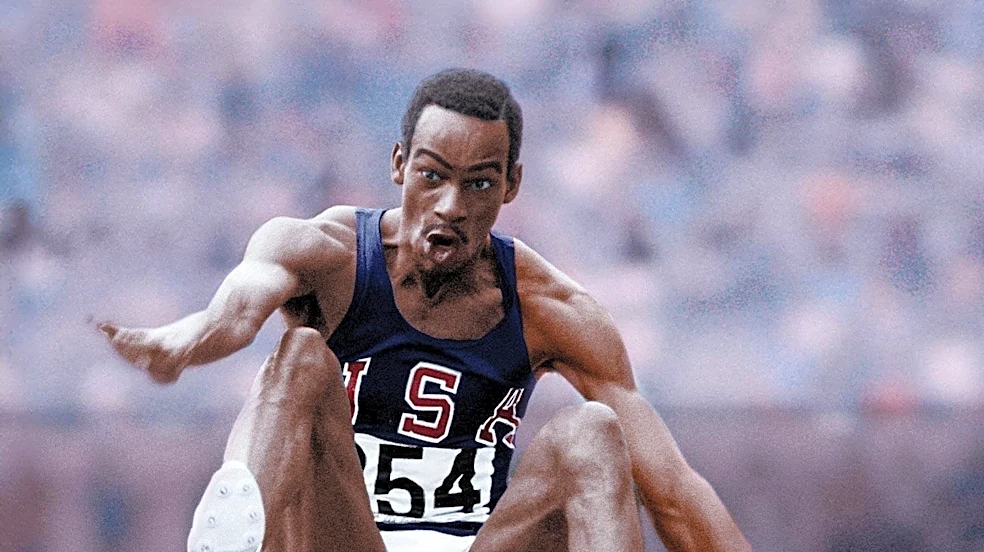




On October 18, 1968, at the Summer Olympics in Mexico City, Bob Beamon etched his name into athletic lore with a long jump that redefined the limits of human performance. Entering the Games as a strong contender, Beamon delivered a performance so extraordinary that it not only secured him a gold medal but also created a new benchmark in sports. His jump shattered the existing world record by an astonishing margin, leaving competitors and spectators
in awe and forever altering the landscape of the long jump event. This single moment became a defining highlight of the Mexico City Olympics, a testament to athletic prowess and the unpredictable nature of elite competition.
The Road to Mexico City: A Favorite's Journey
Bob Beamon arrived at the 1968 Summer Olympics in Mexico City as the clear favorite to win the gold medal in the long jump. His performance leading up to the Games had been dominant, having won 22 out of 23 meets he competed in that year. This impressive streak included a personal best jump of 8.33 meters (27 ft 3¾ in). He had even achieved a world's best mark of 8.39 meters (27 ft 6¼ in) that year, though it was not eligible for record books due to excessive wind assistance. Beamon's success wasn't limited to outdoor events; in 1968, he also secured the AAU and NCAA indoor long jump and triple jump titles, as well as the AAU outdoor long jump title, showcasing his versatility and consistent excellence.
Despite his strong form, Beamon faced a moment of significant pressure during the Olympic qualifying rounds. He nearly missed advancing to the final after overstepping on his first two attempts. With only one chance remaining to make a valid jump, Beamon had to adjust his strategy. He re-measured his approach run, starting from a spot slightly in front of the takeoff board. This careful adjustment paid off, as he executed a fair jump that successfully advanced him to the final. In the final, he was set to compete against formidable opponents, including the two previous Olympic gold medalists: fellow American Ralph Boston, who won in 1960, and Lynn Davies of Great Britain, the 1964 champion. Also in the field was Igor Ter-Ovanesyan of the Soviet Union, a two-time bronze medalist, making for a highly anticipated competition.
The Unbelievable Leap: A Record Shattered
On October 18, 1968, Bob Beamon stepped onto the runway for his first attempt in the long jump final. What followed was a moment that would become legendary. He launched himself into the air, covering an unprecedented distance. When he landed, the optical device typically used to measure jumps was not long enough to register his mark, forcing officials to use a manual tape measure. After several minutes of measurement, the distance was announced: 8.90 meters (29 ft 2¼ in). This jump not only broke the existing world record but surpassed it by an astonishing 55 centimeters (21¾ inches), a margin that was previously unimaginable in the event's history.
Beamon himself, unfamiliar with metric measurements, did not immediately grasp the magnitude of his achievement. It was his teammate and coach, Ralph Boston, who translated the distance into feet, explaining that Beamon had broken the world record by nearly two feet. The realization of his monumental feat overwhelmed Beamon. His legs gave way, and he experienced a brief cataplexy attack, a sudden loss of muscle tone triggered by intense emotion. He collapsed to his knees, his body unable to support itself, covering his face with his hands in a moment of profound shock and astonishment. The defending Olympic champion, Lynn Davies, famously remarked to Beamon,