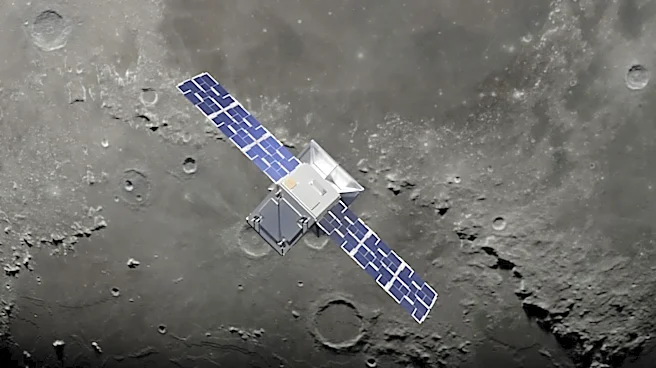




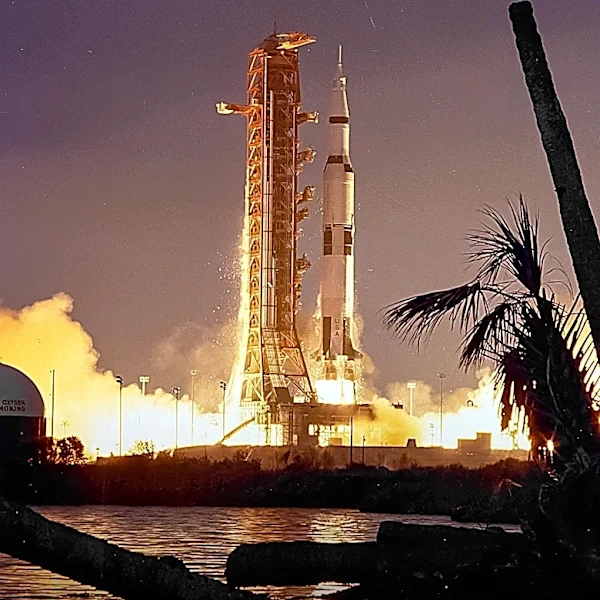



Lunar Orbiter 5 marked the culmination of the Lunar Orbiter series, a pivotal program in the history of lunar exploration. Launched in 1967, this mission was tasked with capturing detailed images of the Moon's surface, particularly focusing on potential landing sites for future Apollo missions. As the last spacecraft in its series, Lunar Orbiter 5 played a crucial role in expanding our understanding of the Moon, providing comprehensive photographic
coverage and valuable data until its mission concluded in 1968.
Mission Objectives and Achievements
Lunar Orbiter 5 was designed with specific objectives in mind. Its primary goal was to photograph potential landing sites for the Apollo and Surveyor missions, as well as to capture images of the Moon's far side, which had not been extensively photographed before. The spacecraft was equipped with advanced instruments to collect selenodetic, radiation intensity, and micrometeoroid impact data. These capabilities allowed it to contribute significantly to the evaluation of the Manned Space Flight Network tracking stations and the Apollo Orbit Determination Program.
During its mission, Lunar Orbiter 5 successfully acquired a total of 633 high-resolution and 211 medium-resolution frames. These images provided unprecedented detail, with resolutions down to 2 meters. The mission's photographic achievements brought the cumulative coverage of the Moon's surface by the Lunar Orbiter series to an impressive 99%. This comprehensive mapping was instrumental in selecting safe landing sites for future manned missions to the Moon.
The Journey and Technical Details
The spacecraft was launched into a cislunar trajectory and entered an elliptical near-polar lunar orbit on August 5, 1967. Initially, its orbit ranged from 194.5 to 6,023 kilometers, with an inclination of 85 degrees and a period of 8 hours and 30 minutes. Adjustments were made to the orbit on August 7 and 9, lowering the perilune to 100 kilometers and then to a 99-by-1,499-kilometer orbit, respectively.
Lunar Orbiter 5's mission spanned from August 6 to 18, 1967, with data readout continuing until August 27. The spacecraft's ability to capture high-resolution images was complemented by its capacity to gather accurate data from other experiments throughout its mission. This data collection was crucial for understanding the Moon's environment and preparing for future lunar exploration.
Conclusion of the Mission
The mission of Lunar Orbiter 5 concluded when the spacecraft was deliberately commanded to crash onto the lunar surface on January 31, 1968. This decision was made to prevent the spacecraft from becoming a navigational hazard for subsequent Apollo missions. The crash occurred at 2.79 degrees south latitude and 83 degrees west longitude on the Moon's surface.
Lunar Orbiter 5's contributions to lunar exploration were significant, providing essential data and images that informed the planning and execution of future missions. As the final mission in the Lunar Orbiter series, it left a lasting legacy in the field of space exploration, paving the way for the successful Apollo landings that followed.