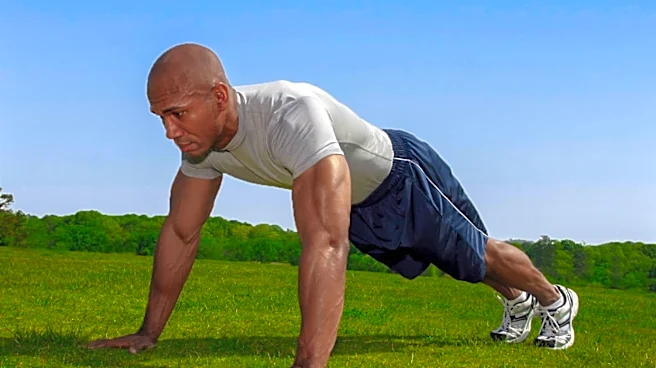


Beyond the standard push-up, a wide array of advanced variations exists, designed to significantly increase the challenge, target specific muscle groups more intensely, and demand greater stability and balance. These techniques move beyond basic strength building, pushing practitioners to develop enhanced neuromuscular coordination and control. From unstable surfaces to unilateral movements, these advanced push-ups transform a common exercise into
a formidable test of physical prowess, often requiring years of dedicated training to master. They are frequently employed by athletes and fitness enthusiasts looking to break through plateaus and achieve higher levels of functional strength.
Unstable Surfaces and Increased Range of Motion
One effective way to elevate the difficulty of push-ups is by introducing unstable surfaces. Push-ups on medicine balls, for instance, involve performing the exercise on top of three medicine balls instead of the floor. This modification introduces a significant element of instability, forcing greater core engagement and demanding more precise control from the stabilizing muscles. The challenge can be further amplified with variations like push-ups on medicine balls with one leg raised, decline push-ups on medicine balls, or even decline push-ups on medicine balls with one leg raised. These variations not only build upper body strength but also enhance overall stability and balance.
Another method to increase muscle stress is by allowing for a greater range of motion. Raising the hands with the aid of push-up bars or dumbbells enables the body to descend further than it would on a flat floor, thereby providing a deeper stretch and more extensive work for the muscles involved. This extended range of motion can lead to greater muscle activation and development, particularly in the chest and shoulders. The guillotine push-up, for example, is performed from an elevated position, where the practitioner lowers the chest, head, and neck past the plane of the hands, specifically aiming to stretch the shoulders and place extra emphasis on those muscles.
Unilateral and Tandem Challenges
Unilateral variations, which involve using one limb instead of two, dramatically increase the resistance and demand on the working muscles and core stabilizers. Many standard push-up variations can be adapted to a one-arm version, significantly increasing the challenge. Similarly, a single-leg push-up involves lifting one leg off the ground while performing the push-up, then repeating with the other leg. This not only increases the load on the upper body but also requires greater core stability to prevent rotation and maintain proper form. These unilateral exercises are excellent for addressing muscle imbalances and building symmetrical strength.
For those seeking a collaborative challenge, tandem push-ups involve two people working together. In this variation, one person lies face down on top of the other, with each person facing a different direction. It requires precise coordination and balance, as the athletes place their feet on each other's shoulders and press up simultaneously. Tandem knuckle push-ups further intensify this by requiring the exercise to be performed on the knuckles instead of palms, adding a greater challenge to the wrists and forearms. These tandem variations are considered extremely difficult and highlight the importance of teamwork and synchronized movement in physical feats.
Specialized Techniques and World Records
Certain push-up variations are designed for very specific outcomes or are so challenging they become the subject of world record attempts. Hand release push-ups, for instance, require lifting the hands off the floor between each repetition, forcing a full and complete movement and eliminating momentum. This variation builds core and shoulder strength in addition to the benefits of a regular push-up. Knuckle push-ups, performed on the knuckles of the fist, are common in martial arts to toughen knuckles, wrists, and forearms, while also reducing strain on the wrist compared to palm-down push-ups. The Maltese push-up is a gymnastic variation where hands are positioned further down towards the hips with a wide stance, demanding immense strength.
George Kotsimpos, a Greek-Canadian fitness athlete, is renowned for his push-up skills and has achieved numerous Guinness World Records in extreme push-up variations, particularly those performed on unstable surfaces like medicine balls. His achievements include records for