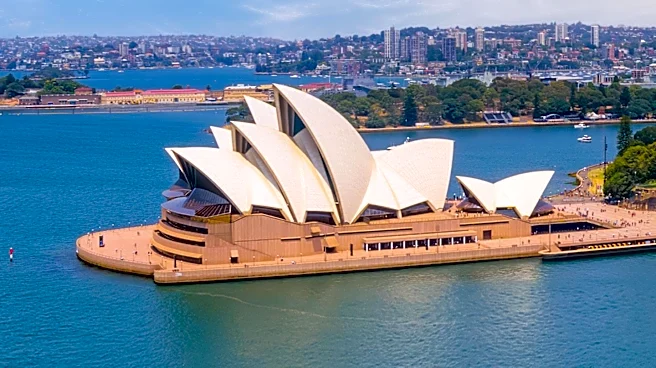







The Sydney Opera House, a multi-venue performing arts center nestled on the foreshore of Sydney Harbour, stands as an undisputed masterpiece of 20th-century architecture. Its distinctive shell-like roofs have made it one of the world's most famous and recognizable buildings, earning it the status of a UNESCO World Heritage Site. Beyond its iconic appearance, the Opera House represents a triumph of architectural innovation, pushing the boundaries of design
and construction through pioneering techniques and collaborative engineering. Its influence extends far beyond its physical presence, shaping modern architectural practices and leaving an indelible mark on the global landscape.
Pioneering Design and Engineering
The design competition for the Sydney Opera House, launched in 1955, sought a vision for a performing arts center that could accommodate both large and small audiences for a variety of events, from opera to lectures. Jørn Utzon's winning concept, though initially presented with "diagrammatic" drawings, was immediately recognized for its groundbreaking potential. The challenge, however, lay in translating this visionary concept, particularly the undefined geometry of its