


The establishment of the United Nations Headquarters in New York City marked a significant moment in post-World War II international relations. However, the journey to secure this iconic location was complex, involving strategic land acquisition and the transformation of a previously industrial and residential area. The site, now a symbol of global cooperation, once held a very different character, reflecting the dynamic urban development of Manhattan.
The Initial Search for a Home
Following its formation, the United Nations embarked on a search for a permanent headquarters. The decision to locate the headquarters in the United States was a pivotal one, and various cities and sites were considered. The eventual selection of New York City, specifically the Turtle Bay neighborhood, was influenced by a combination of factors, including the availability of a suitable plot of land and the vision for a prominent international presence.
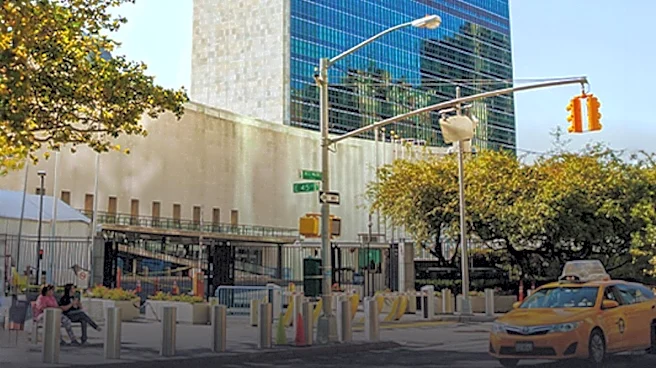
The chosen site, situated between 42nd and 48th Streets and bordering the East River, encompassed between 17 and 18 acres. This substantial parcel of land was acquired from real estate developer William Zeckendorf Sr. The acquisition of such a large and strategically located property was crucial for accommodating the extensive complex required for the UN's operations, including its various buildings and diplomatic functions.
Transforming Turtle Bay: A Neighborhood's Evolution
Before the UN headquarters took root, the Turtle Bay neighborhood presented a starkly different landscape. The area was characterized by a mix of industrial and residential structures, including slaughterhouses and tenement buildings. It also housed the original Eberhard Faber Pencil Factory and, by the 1910s, a gas company building occupied a portion of what would become the UN site. This industrial past highlights the dramatic transformation the area underwent to become a center for international diplomacy.
The development of nearby upscale residential areas like Sutton Place and Beekman Place in the 1920s had already begun to shift the character of the broader vicinity. However, the immediate UN site remained largely industrial. Interestingly, a yacht club was proposed for the site in 1925, but the project proved too expensive, leaving the land open for future development. This historical context underscores the scale of the vision required to envision and execute the UN headquarters project on this particular plot.
Construction and Completion
The groundbreaking for the UN headquarters complex took place on September 14, 1948, initiating a period of intense construction. The project, which involved a board of designers mediated by Harrison & Abramovitz, with final projects developed by Oscar Niemeyer and Le Corbusier, was a monumental undertaking. Construction officially started in 1948 and culminated in the completion of the complex on October 9, 1952.
The total cost of the project was US$65 million, which is equivalent to approximately $610 million in 2024, reflecting the significant investment made in establishing this global institution. The rapid development and substantial financial commitment underscore the international community's dedication to creating a permanent and functional home for the United Nations, transforming a former industrial zone into a beacon of international cooperation.