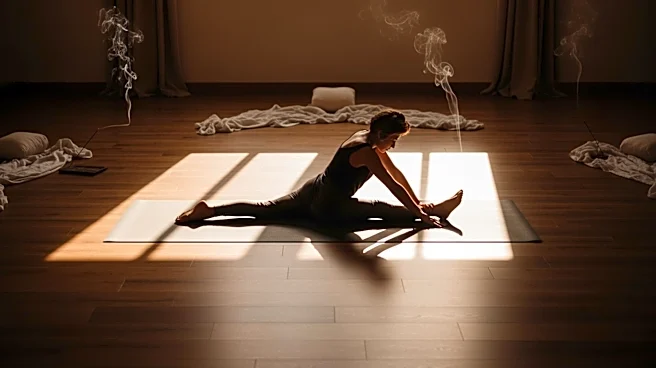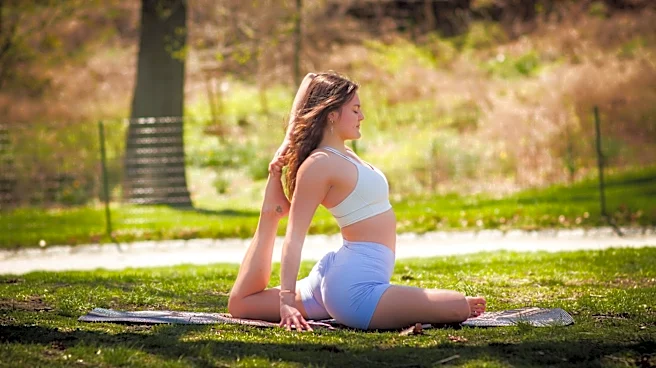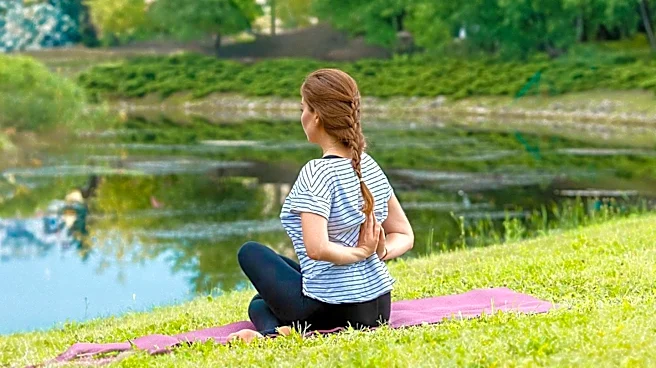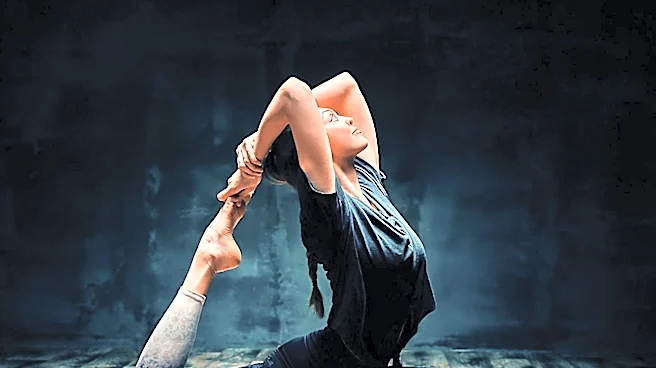






Eka Pada Rajakapotasana, also known as the One-legged King Pigeon Pose, is a seated back-bending yoga pose that showcases flexibility and grace. This pose, rooted in modern yoga as exercise, has several variations that cater to different levels of flexibility and strength. Each variation offers unique benefits and challenges, making it a versatile addition to any yoga practice.
The Basic Pose
The basic form of Eka Pada Rajakapotasana involves starting from a seated
position in Dandasana, or stick pose. From there, one knee is bent with the foot positioned in front of the groin, while the other leg is extended straight back. To complete the pose, the practitioner bends the knee of the rear leg and grasps the foot or ankle with one or both hands. This pose is known for its strong hip-opening properties, as it increases the outward rotation of the femur in the hip joint of the front leg and lengthens the hip-flexing psoas muscle of the rear leg.
For those who may not be able to fully descend the hip of the front leg to the floor, a folded blanket can be used for support. This modification allows practitioners to experience the benefits of the pose while accommodating their current level of flexibility.
Supported and Sleeping Variations
One variation of the pose is the Supported King Pigeon, or Salamba Kapotasana. In this version, the rear leg is kept straight out, and the hands are placed on the ground beside the hips, reducing the intensity of the backbend. If comfortable, the practitioner can arch the back and direct their gaze upwards, enhancing the stretch.
Another variation is the Sleeping Pigeon, also known as Sleeping Swan in Yin Yoga. In this pose, the rear leg remains straight, and the body and arms are stretched forward over the bent forward leg. This variation provides a different kind of stretch and is sometimes referred to simply as "Pigeon," though it differs from the advanced kneeling backbend of Kapotasana.
Advanced Variations
For those seeking a more challenging practice, there are advanced variations of Eka Pada Rajakapotasana. In Eka Pada Rajakapotasana II, the front foot is placed on the floor in front of the hip, with the front knee sharply bent and the hips lifted off the ground. This variation requires significant strength and balance.
Eka Pada Rajakapotasana III involves the front knee pointing forward, with the front foot and lower leg on the ground beneath the thigh. This version emphasizes stability and control.
Finally, Eka Pada Rajakapotasana IV stretches the front foot straight forward along the ground. Practitioners can use props such as a yoga block under the sitting bones or a strap between the hands and the rear foot to assist in achieving the full pose.
These variations of Eka Pada Rajakapotasana offer a range of options for practitioners to explore, each providing unique benefits and challenges. Whether seeking to improve flexibility, strength, or balance, there is a version of this pose to suit every yogi's needs.