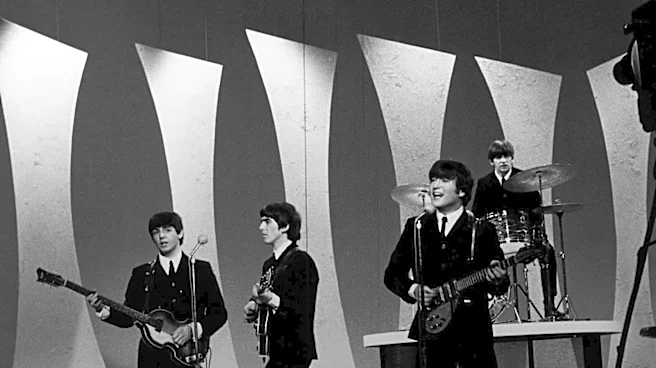






The Cavern Club in Liverpool stands as an iconic landmark in the history of popular music, serving as the primary stage for The Beatles during their formative years. Between 1961 and 1963, the band performed countless times at this subterranean venue, honing their craft and building a loyal following. It was within the damp, brick-arched confines of the Cavern that Brian Epstein first witnessed their raw talent, a moment that would irrevocably alter
the trajectory of both the band and music history. The club, originally a jazz-only establishment, evolved to embrace skiffle and eventually rock 'n' roll, becoming synonymous with the burgeoning Merseybeat sound.
From Jazz Cellar to Rock 'n' Roll Hub
Opened on January 16, 1957, by Sytner, The Cavern Club was initially styled after the Parisian venue Le Caveau, designed as a jazz-only club. It was an arched cellar built of bricks, located beneath a seven-story fruit warehouse, and had previously served as a wine cellar and an air raid shelter during World War II. Its underground location made it notoriously damp and incredibly hot when filled with an audience. The club's strict policy initially prohibited rock 'n' roll, tolerating only skiffle. However, this rule was challenged early on by John Lennon's group, The Quarrymen, who, during an interlude spot, defied the ban by playing Elvis Presley's "Don't Be Cruel." Sytner famously handed Lennon a note reading, "Cut out the bloody rock 'n' roll."
In 1959, Sytner sold the club to an accountant named McFall. By 1960, The Quarrymen had evolved into The Beatles, and their residency at the Cavern Club became legendary. The club's atmosphere and its role in The Beatles' story have been explored in documentaries such as "I Was There: When the Beatles Played the Cavern" (2011) and "Good Ol' Freda" (2013), highlighting its enduring cultural significance.
Brian Epstein's Discovery and the Birth of a Legend
Brian Epstein's fateful visit to The Cavern Club on November 9, 1961, marked a turning point for The Beatles. Having noticed their name in Bill Harry's Mersey Beat magazine and on local posters, Epstein, then managing his family's NEMS music store, arranged to see them perform. He and his assistant, Alistair Taylor, were granted entry without queuing, and their arrival was even announced over the club's public-address system. Epstein was immediately struck by their music, beat, and stage humor, and later by their personal charm when he met them in their cramped dressing room.
This initial impression led Epstein to consider managing the band. Despite Taylor's initial lukewarm reaction, Epstein was convinced of their potential, declaring, "I think they're tremendous!" He subsequently contacted Allan Williams, their previous promoter, to confirm that Williams no longer had ties to the group, despite Williams's warning "not to touch them with a fucking barge pole." Epstein's commitment was evident as he watched The Beatles perform over the next three weeks, ultimately leading to his management contract. The Cavern Club thus became the stage where the manager who would guide The Beatles to global stardom first recognized their immense talent.
The Cavern's Growing Fame and International Appeal
As The Beatles' popularity soared under Epstein's management, so too did the fame of The Cavern Club. During their "Welcome Home" session in June 1962, the band delivered what resident DJ Wooler described as "one of their finest ever performances," generating a "feverish reaction" that foreshadowed the "Beatlemania" that would soon sweep the nation. The club rapidly became the most famous in Britain, attracting international attention from television cameras, radio broadcasters, and press representatives across Europe, as well as reporters from U.S. magazines like Time, Life, and Newsweek. Celebrities such as Chet Atkins, Anna Neagle, and Arthur Fiedler also visited.
The club's popularity led to its expansion, incorporating adjacent premises and adding a recording studio and a new stage. The demand for "Beatleboard"—pieces of wood from the old stage where The Beatles had played—was so great internationally that it took four months to process orders. The Beatles' press officer, Tony Barrow, even wrote a book titled "On the Scene at the Cavern," which captured the club's heyday and its vibrant atmosphere, further cementing its place in cultural history.