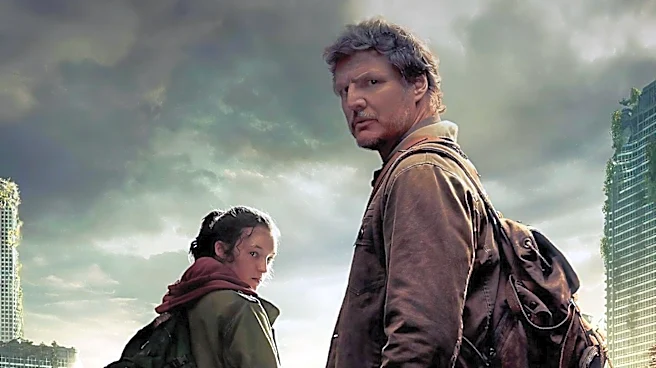









Post-apocalyptic television series represent a compelling subgenre of fiction that explores the aftermath of civilization's collapse. These shows are set in worlds where a catastrophic event has occurred, leading to widespread destruction and a struggle for survival. The genre is not confined to a single type of narrative but rather encompasses a broad spectrum of stories, often blending elements of science fiction, science fantasy, dystopia, and horror.
This versatility allows for diverse explorations of human nature, societal breakdown, and the arduous journey of rebuilding or simply enduring in a shattered world.
Defining the Post-Apocalyptic Landscape
The core characteristic of post-apocalyptic television is its setting: a world where Earth's civilization is either in the process of collapsing or has already collapsed. This foundational premise allows writers to delve into the immediate travails and psychological states of survivors, or to explore societies that have emerged considerably later, often with the memory of pre-catastrophe civilization forgotten or mythologized. The genre provides a unique lens through which to examine human resilience, the formation of new communities, and the re-evaluation of what truly matters when the established order is gone.
This setting also offers a practical narrative device for soft science fiction. By depicting a world where technological advancement has been halted or reversed, writers can focus on character-driven stories and societal dynamics without needing to constantly invent futuristic technologies. This approach ensures the narratives remain relevant to contemporary audiences, regardless of how far into the future the events are set, by emphasizing universal themes of survival and human interaction.
Diverse Catastrophes and Their Aftermath
The events that trigger the apocalypse in these television series are incredibly varied, contributing to the genre's rich diversity. They can be climatic, such as runaway climate change, or astronomical, like an impact event. Destructive human-caused events, including nuclear holocaust or resource depletion, are also common. Medical disasters, whether natural pandemics or human-engineered plagues, frequently serve as the catalyst for societal collapse. Beyond these, more imaginative scenarios like a zombie apocalypse, cybernetic revolt, technological singularity, dysgenics, or alien invasion provide unique narrative frameworks.
Each type of catastrophe shapes the specific challenges faced by the survivors and the tone of the series. A nuclear winter might lead to a bleak, desolate landscape, while a zombie outbreak focuses on immediate, visceral threats. Regardless of the specific cause, the overarching theme remains the struggle to survive and adapt in a world fundamentally altered. These series often explore how individuals and groups cope with loss, rebuild social structures, and confront the moral ambiguities that arise in extreme circumstances, making post-apocalyptic television a powerful reflection on humanity's potential for both destruction and endurance.