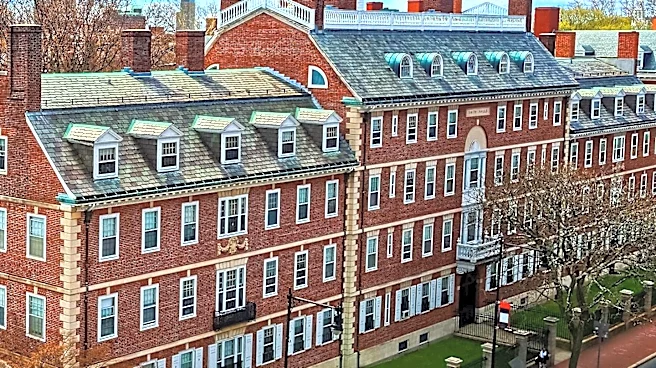






Harvard University, the oldest institution of higher learning in the United States, traces its origins back to 1636. It was founded in New Towne, a settlement established just six years prior within the colonial-era Massachusetts Bay Colony, one of the original Thirteen Colonies. This early establishment reflected the Puritan settlers' foresight and their commitment to education, particularly for training clergy for their new commonwealth, which they
envisioned as a "church in the wilderness." The institution's early years were deeply intertwined with the religious and intellectual aspirations of the Puritan community that founded it.
From New Towne to Cambridge and Harvard College
In 1638, New Towne, the birthplace of the nascent college, was renamed Cambridge. This renaming was a deliberate homage to Cambridge, England, a significant intellectual center where many of the Colony's settlers had received their education at the University of Cambridge. This connection underscored the founders' intention to replicate and sustain the academic traditions they valued. The following year, in 1639, the school was officially named Harvard College. This honor was bestowed upon its first major benefactor, the Puritan clergyman John Harvard, who bequeathed a substantial sum of £779 pounds sterling and his personal library of approximately 400 books to the new institution. This generous gift was instrumental in solidifying the college's foundation and ensuring its early growth.
Early Curriculum and Ministerial Training
In its initial decades, Harvard College primarily served the purpose of training Puritan Congregational ministers. The curriculum offered during this period was classical in nature, closely mirroring the English university model, particularly that of the University of Cambridge. This educational approach was familiar to many of the colonial Massachusetts leaders who had studied in England before emigrating. The focus on classical studies and theological training ensured a steady supply of educated clergy for the burgeoning commonwealth, fulfilling the original vision of its founders. The college's role in shaping the intellectual and spiritual landscape of colonial Massachusetts was profound, as its graduates frequently filled prominent clerical and civil positions within the colony.
Evolution into a University and Global Stature
The institution's scope began to broaden significantly in the late 18th century. Harvard started granting graduate and doctorate-level degrees, signaling a shift towards a more comprehensive academic mission. In 1780, the Constitution of Massachusetts formally recognized Harvard College as a university, marking a pivotal moment in its development. Just three years later, in 1783, a new medical school was established, formally named the Medical Institution of Harvard University. This expansion into professional education continued over the centuries, with a dozen graduate and professional schools being formed around the nucleus of the undergraduate College. Historically influential schools such as those of law (established in 1817), business (1908), and Graduate Arts and Sciences (1890) further cemented Harvard's reputation. Since the late 19th century, Harvard has consistently been recognized as one of the most prestigious schools globally, boasting the largest library system and financial endowment, a testament to its enduring influence and academic excellence.