






The tibialis anterior muscle is far more than just a muscle that moves the foot; it is a dynamic contributor to overall foot mechanics and lower leg stability, particularly during locomotion. Its actions are finely tuned to the demands of both open and closed kinetic chain movements, allowing for precise control of the foot and ankle. From maintaining the foot's arch to ensuring balance on uneven surfaces, the tibialis anterior is indispensable for efficient
and stable movement.
Essential Functions in Foot Movement
The primary movements facilitated by the tibialis anterior are dorsiflexion and inversion of the ankle. Dorsiflexion is the action of pulling the top of the foot towards the shin, while inversion involves turning the sole of the foot inward. These two actions are fundamental for a wide range of activities, from simply walking to more complex athletic maneuvers. The muscle's ability to perform these movements is critical for clearing the foot during the swing phase of gait and for positioning the foot correctly for ground contact.
Beyond these basic movements, the tibialis anterior also plays a significant role in maintaining the structural integrity of the foot. It helps to uphold the medial longitudinal arch, which is a key component of the foot's ability to absorb shock and distribute weight. This support is crucial for preventing excessive flattening of the arch, which can lead to various foot problems. The muscle's continuous engagement helps to keep the arch resilient and functional during weight-bearing activities.
Stabilizing the Ankle During Gait
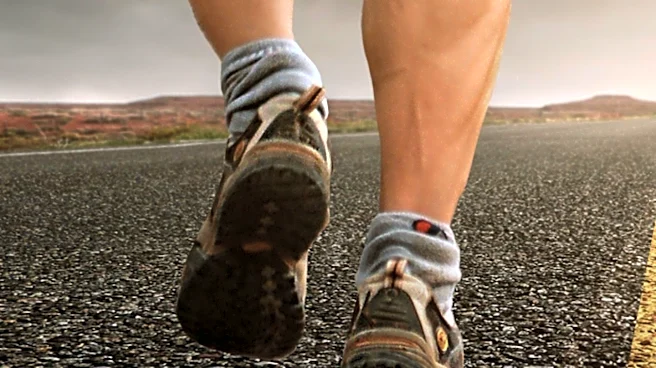
One of the most critical functions of the tibialis anterior is its role in stabilizing the ankle, especially during the different phases of walking. As the foot makes contact with the ground, the muscle engages in an eccentric contraction. This controlled lengthening action helps to decelerate the foot, preventing it from slapping down onto the ground and absorbing impact forces. This eccentric control is vital for smooth and efficient gait, protecting the ankle joint from sudden stresses.
Following the contact phase, during the swing phase of walking, the tibialis anterior performs a concentric contraction. This action actively pulls the foot upwards, ensuring that the toes are lifted clear of the ground. This prevents tripping and allows for a smooth transition of the leg forward. The muscle's ability to switch between eccentric and concentric contractions demonstrates its sophisticated involvement in the complex biomechanics of walking, adapting its action based on whether the foot is weight-bearing or not.
Specialized Actions and Clinical Relevance
The tibialis anterior also contributes to more specialized actions, such as "locking" the ankle. This occurs during an isometric contraction, for instance, when toe-kicking a ball. In this scenario, the muscle contracts without changing length, providing rigidity to the ankle joint, which allows for a powerful and controlled kick. This ability to stabilize the ankle in a fixed position highlights its versatility.
Furthermore, when the foot is on the ground, the tibialis anterior assists in balancing the leg and the talus bone on the other tarsal bones. This intricate balancing act ensures that the leg remains vertical, even when an individual is walking on uneven terrain. This function is paramount for maintaining equilibrium and preventing falls, underscoring the muscle's importance in everyday mobility. While rare, a tibialis anterior hernia, where fat or other material protrudes through a defect in the muscle, can occur, sometimes due to trauma like a kick during sports.