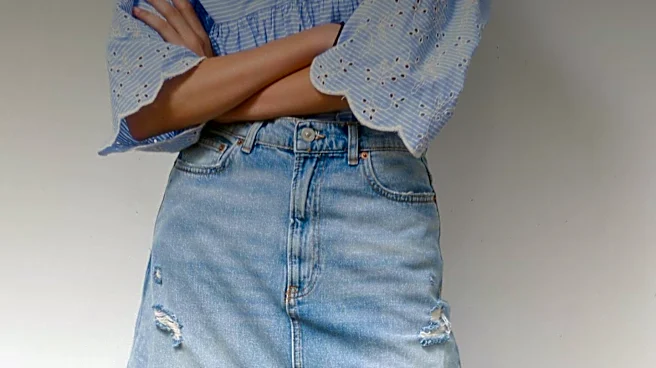







The denim skirt, a versatile garment made from the same sturdy material as blue jeans, has a rich and varied history in fashion. Its journey began not in high-fashion design houses, but through resourceful repurposing, eventually evolving into a mainstream staple. This garment has adapted to different cultural contexts and fashion trends, demonstrating its enduring appeal across several decades and diverse populations.
Origins in Repurposing: The Hippie Influence
The concept of the denim skirt
first emerged in the 1960s, driven by the countercultural movement of the hippies. Rather than being manufactured as new items, these early denim skirts were created by recycling old denim jeans. The process involved opening the inseams of the jeans and then inserting triangular pieces of denim or other fabrics into the front and, often, the back. This method allowed for the creation of a long denim skirt, offering an alternative to trousers and reflecting the era's emphasis on individuality and sustainability through upcycling.
This initial phase of the denim skirt's existence was characterized by its DIY nature and its connection to a specific subculture. It was a garment born out of necessity and creativity, transforming existing clothing into something new and expressive. The practice of inserting fabric pieces also allowed for customization, making each skirt unique and further aligning with the personalized style prevalent among hippies.
Mainstream Introduction and 1980s Popularity
It wasn't until the 1970s that denim skirts made their official debut in mainstream fashion lines. This marked a significant shift from their handmade, countercultural origins to commercially produced apparel. The garment began to be recognized by a wider audience and integrated into more conventional clothing collections, signaling its growing acceptance.
The 1980s saw a particular surge in the popularity of denim miniskirts, especially among teenagers. These miniskirts often featured a pencil skirt silhouette, a design that became a defining characteristic of the era's youth fashion. Initially, these skirts were available in darker blue washes. However, as the trend evolved, they began to incorporate more varied styles, including pinstripes—such as light blue on darker blue or red on black—and acid wash finishes. This period solidified the denim miniskirt as a prominent fashion item, though its dominance eventually waned by the late 1980s, giving way to knit miniskirts.
Re-emergence and Modern Adaptations
The denim miniskirt experienced a significant re-emergence in the latter part of the 1990s. This revival is often attributed to figures like Marnie Bjornson, a notable personality in the Reykjavik style scene, who is credited with reinvigorating the denim skirt in 1996. The same year, actress Pamela Anderson was seen wearing a light-washed denim skirt in a promotional photoshoot for the film "Barb Wire," further contributing to its renewed visibility and appeal.
The denim miniskirt of the early 21st century distinguished itself by being notably shorter than its 1980s predecessors, reflecting evolving fashion sensibilities. In the late 2000s and early 2010s, a popular trend involved wearing short denim skirts with capri-length leggings and ballet flats. This ensemble was sometimes accessorized with socks, or alternatively, sneakers with socks or Sperrys boat shoes. This demonstrates the denim skirt's continuous adaptability and its ability to integrate into contemporary fashion trends, maintaining its status as a versatile and enduring piece of clothing.