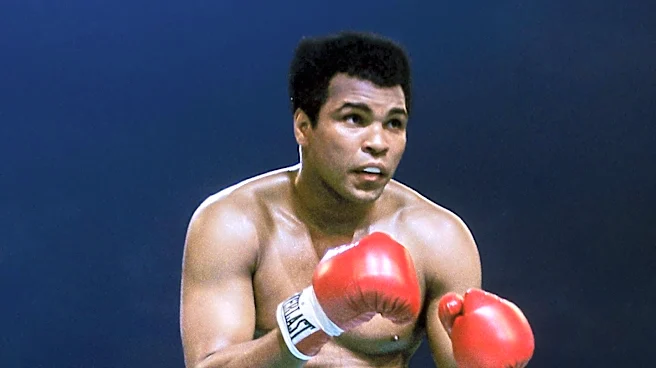









The professional boxing match between Muhammad Ali and Karl Mildenberger on September 10, 1966, was more than just a contest for the WBC, NYSAC, and The Ring heavyweight championship. Held in Frankfurt, Germany, this event marked several significant firsts in boxing history, making it a memorable occasion for both the sport and its global audience. It was Ali's sixth title defense since he first won the world title in 1964, and it pitted him against
a formidable European champion.
Germany's First World Heavyweight Title Fight
One of the most notable aspects of this fight was its location. Frankfurt, Germany, played host to a world heavyweight title fight for the very first time. This brought a major international sporting event to the country, drawing considerable attention and a large crowd. Over 40,000 spectators gathered to witness the championship bout, highlighting the excitement and anticipation surrounding Ali's defense against the German challenger. The decision to hold such a high-profile match in Germany underscored the growing international appeal of boxing and Muhammad Ali's global stature.
Karl Mildenberger himself added another layer of historical significance to the event. He became the first southpaw boxer ever to receive a heavyweight title shot. This presented a unique challenge for Ali, who was accustomed to fighting orthodox-stance opponents. Mildenberger's southpaw style initially caused Ali some discomfort in the early rounds, a sight that was rarely seen from the dominant champion. This tactical novelty contributed to the intrigue and competitive nature of the fight.
Pioneering Live Color Satellite Broadcast
Beyond the in-ring action and the historic location, the Muhammad Ali vs. Karl Mildenberger fight also broke new ground in broadcasting technology. It was the first-ever sports event to be broadcast live via satellite through a color telecast. This technological advancement allowed a wider audience to experience the fight in a more immersive way, bringing the vibrant details of the event directly into homes across different regions. The use of color telecast via satellite was a significant step forward in sports broadcasting, setting a precedent for future global sporting events.
Muhammad Ali entered the fight with a pre-fight record of 25 wins and no losses, with 20 of those victories coming by knockout. Karl Mildenberger, the European Heavyweight Champion and ranked number 5 by the WBA, had a record of 49 wins, 2 losses, and 3 draws, with 17 knockouts. Ali, at 24 years and 7 months old, was slightly younger than Mildenberger, who was 28 years and 9 months old. Ali also had a height advantage, standing at 6 feet 3 inches compared to Mildenberger's 6 feet 1 and a half inches, and weighed 204 pounds to Mildenberger's 195 pounds. Ali was given 10:1 odds of defeating the European Champion, reflecting his status as the reigning world champion.
The Fight's Progression and Outcome
Despite the early difficulties posed by Mildenberger's southpaw style, Ali quickly adapted and took control of the fight by the middle rounds. Mildenberger sustained a cut above his left eye in the sixth round, which completely swelled shut by the end of the eighth round. Ali also scored three knockdowns during the bout, in the fifth, eighth, and tenth rounds, though Mildenberger bravely managed to beat the count each time. The fight ultimately concluded in the 12th round when the referee stopped the contest, resulting in a technical knockout victory for Ali. This marked Ali's 21st knockout victory in his 26 professional fights, solidifying his reputation as a dominant force in the heavyweight division.