





The Yorktown campaign, also known as the Virginia campaign, represented a critical series of military maneuvers and battles during the American Revolutionary War. Culminating in the siege of Yorktown in October 1781, this campaign led directly to the surrender of General Charles Cornwallis's British Army force. This pivotal event marked the beginning of serious peace negotiations and ultimately the end of the war, showcasing a remarkable display of cooperative
decisions between French and American forces, often in contrast to British indecision and miscommunication.
Allied Strategy and the Road to Virginia
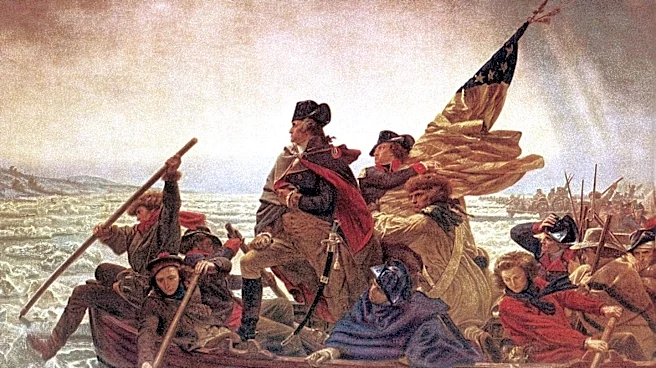
The allied leaders, General George Washington and Comte de Rochambeau, met in Wethersfield, Connecticut, in May 1781 to discuss their next steps. While Washington initially favored an attack on New York, Rochambeau advocated for action in Virginia, where British forces were less entrenched. Dispatches were sent to Admiral de Grasse, outlining both options, though Rochambeau privately conveyed his preference for Virginia. De Grasse, after a successful campaign in the West Indies where his forces captured Tobago, arrived at Cap-Français in July. There, he negotiated with the Spanish, securing their promise to protect French commerce and territories, which allowed him to bring his entire fleet of 28 ships of the line north. He also took on 3,500 troops under the Marquis de St. Simon and obtained funds from the Spanish in Havana to pay Rochambeau's troops.De Grasse informed Washington and Rochambeau that he expected to arrive in the Chesapeake at the end of August and would need to depart by mid-October. On August 14, Washington learned of de Grasse's decision to sail for the Chesapeake, reluctantly abandoning the idea of assaulting New York. The combined Franco-American army began its march south on August 19, employing tactics designed to deceive General Clinton about their true intentions, including sending forces along the New Jersey shore to simulate an attack on Staten Island.
British Miscalculations and Naval Maneuvers
General Clinton, concerned by the movement of the French army toward New York, sent Cornwallis a confusing series of letters regarding fortification and troop movements. In June, Clinton requested Cornwallis to fortify either Yorktown or Williamsburg and send troops to New York. Cornwallis, finding Yorktown defensively inadequate at the time, initially planned to move to Portsmouth. However, new orders from Clinton on July 20 countermanded previous instructions, explicitly ordering Cornwallis to establish a fortified deep-water port. This decision was influenced by the navy's dissatisfaction with New York as a base due to sandbars and winter ice. Cornwallis, despite warning that the Chesapeake's open bays made any base vulnerable, chose Yorktown over Portsmouth, landing there and fortifying it and Gloucester Point by August 6.Meanwhile, Admiral Rodney, despite warnings, underestimated de Grasse's intentions, believing he would not bring his entire fleet north. Rodney, who was ill, sailed back to England, leaving Admiral Hood to pursue de Grasse with a reduced fleet. Hood reached the Chesapeake on August 25, finding it empty, and proceeded to New York to meet Admiral Sir Thomas Graves. News of de Barras's departure from Newport with French siege equipment reached New York on August 28. Graves, Clinton, and Hood, still unaware of Washington's march south, concluded de Grasse must be headed for the Chesapeake. Graves sailed from New York on August 31 with 19 ships of the line.
The Battle of the Chesapeake and the Siege Begins
De Grasse reached the Chesapeake on August 30, five days before Hood. He immediately debarked troops to assist Lafayette in blockading Cornwallis and stationed ships to blockade the York and James Rivers. On September 5, the British fleet arrived at the mouth of the Chesapeake. De Grasse, with men ashore, quickly moved his fleet to meet the British. In the ensuing Battle of the Chesapeake, de Grasse secured a narrow tactical victory. The two fleets drifted southeast for several days, with the British avoiding further engagement. This allowed de Barras's fleet, carrying the crucial French siege equipment, to arrive safely. Graves, forced to scuttle one of his ships, returned to New York for repairs, leaving the French in control of the Chesapeake Bay.With French naval superiority established, smaller French ships transported the Franco-American army down the Chesapeake to Yorktown, completing the encirclement of Cornwallis. On September 17, Washington arrived at the camps outside Yorktown. He, Rochambeau, and de Grasse finalized preparations for the siege, with de Grasse agreeing to provide marines and cannons and to delay his departure until the end of October. The siege formally began on September 28. Despite a late attempt by Cornwallis to escape via Gloucester Point, the allied siege lines tightened, and their cannons inflicted heavy damage. On October 17, Cornwallis opened negotiations to surrender, just as a British relief fleet with 6,000 troops sailed from New York, but it was too late.