






The Czechoslovakian Wolfdog is a breed that immediately captures attention due to its striking wolf-like appearance and a temperament shaped by its unique heritage. Developed from an experimental cross between German Shepherds and Carpathian wolves, this breed exhibits a fascinating blend of canine and lupine traits. Officially recognized in 1982, these dogs are known for their intelligence, strong pack mentality, and a range of physical attributes
that set them apart.
Physical Attributes: A Wolf's Silhouette
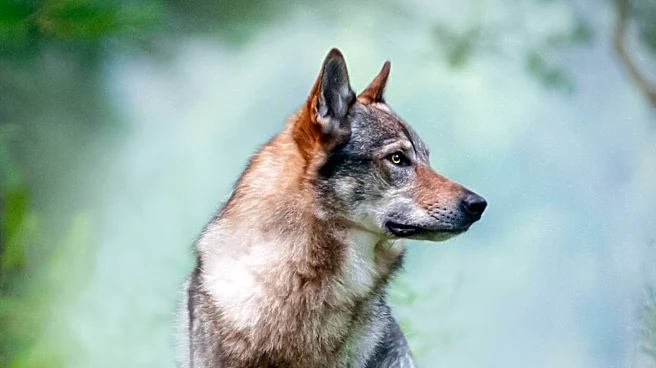
The physical build of the Czechoslovakian Wolfdog strongly evokes its wolf ancestry. Males typically stand at a minimum height of 65 cm (26 inches) at the withers, while females are at least 60 cm (24 inches). Their body weight is substantial, with males reaching a minimum of 30 kg (65 lb) and females 26 kg (55 lb). The body frame is rectangular, characterized by a height-to-length ratio of 9:10 or less, contributing to their athletic and powerful appearance.
Their coat is a defining feature, described as straight, close-fitting, and very thick during the winter months, providing excellent insulation. In summer, the coat becomes thinner. The color palette ranges from yellowish-grey to silver-grey, consistently featuring a distinctive light mask and lighter hair on the chest and under the neck. Dark grey variations are also possible, always retaining the light mask. Characteristic facial features include amber eyes set obliquely and short, upright, triangular ears. The breed possesses a complete set of 42 very strong teeth, with both scissors-shaped and plier-shaped dentition being acceptable. Their movement is described as light, harmonious, and tenacious, indicative of a natural canterer with long strides.
Temperament and Training: A Purposeful Approach
Czechoslovakian Wolfdogs are highly intelligent, playful, and temperamental animals that learn easily. However, their training requires a specific approach. They are not dogs that will train spontaneously; instead, their behavior is strictly purposeful, meaning that effective training necessitates finding strong motivation. The most common reason for training failure is often attributed to tiring the dog with long, useless repetitions of the same exercise, which can lead to a loss of motivation. This highlights the need for engaging and varied training methods.
These dogs possess admirable senses and are exceptionally skilled at following trails, a trait undoubtedly inherited from their wolf ancestors. They are also notably independent and capable of cooperating within a pack with a special sense of purposefulness. Their ability to shift their activity to night hours if required made them valuable in military applications, where independent pack work without constant human control was sometimes necessary. However, training can present challenges when barking is required, as Czechoslovakian Wolfdogs have a much wider range of expressive means, and barking may feel unnatural to them in certain situations. They often attempt to communicate with their masters in other ways. Generally, achieving stable and reliable performance from a Czechoslovakian Wolfdog takes more time compared to training traditional specialized breeds.
Health and Modern Roles
Czechoslovakian Wolfdogs are generally considered naturally healthy animals, often affected by fewer inherited diseases than many other dog breeds. This robust health is sometimes attributed to heterosis, or hybrid vigor, which can result in offspring being healthier than either parent. While there is some debate regarding the effectiveness of standard rabies vaccines on wolfdogs, the USDA recommends an off-label use of the vaccine, though it has not officially approved any specific rabies vaccine for the breed. Owners and breeders sometimes suggest that the lack of official approval is a political stance against wolfdog ownership.
Despite these considerations, the breed has found various applications. Some Czechoslovakian Wolfdogs have been successfully employed in search-and-rescue operations in the United Kingdom, demonstrating their versatility and working capabilities. Their unique blend of intelligence, physical prowess, and distinct temperament makes them a fascinating and capable breed, appealing to those who understand and can meet their specific needs.